You arrive at Fairchild Tropical Botanic Garden expecting beauty. And you get it—lush canopies, improbable greens, palms that seem almost theatrical in their elegance. But that is only the surface. Stay longer, walk slower, and something deeper begins to register.
This is not a garden.
It is a living archive of what still exists—and what could disappear.
Fairchild operates on a different frequency than most places open to the public. While visitors wander shaded paths, scientists work quietly behind the scenes, cataloging, propagating, preserving. Seeds are collected not for display, but for survival. Species on the brink are studied with urgency that never feels performative. There is no spectacle here, no alarmist signage—just an unwavering commitment to knowledge as a form of protection.
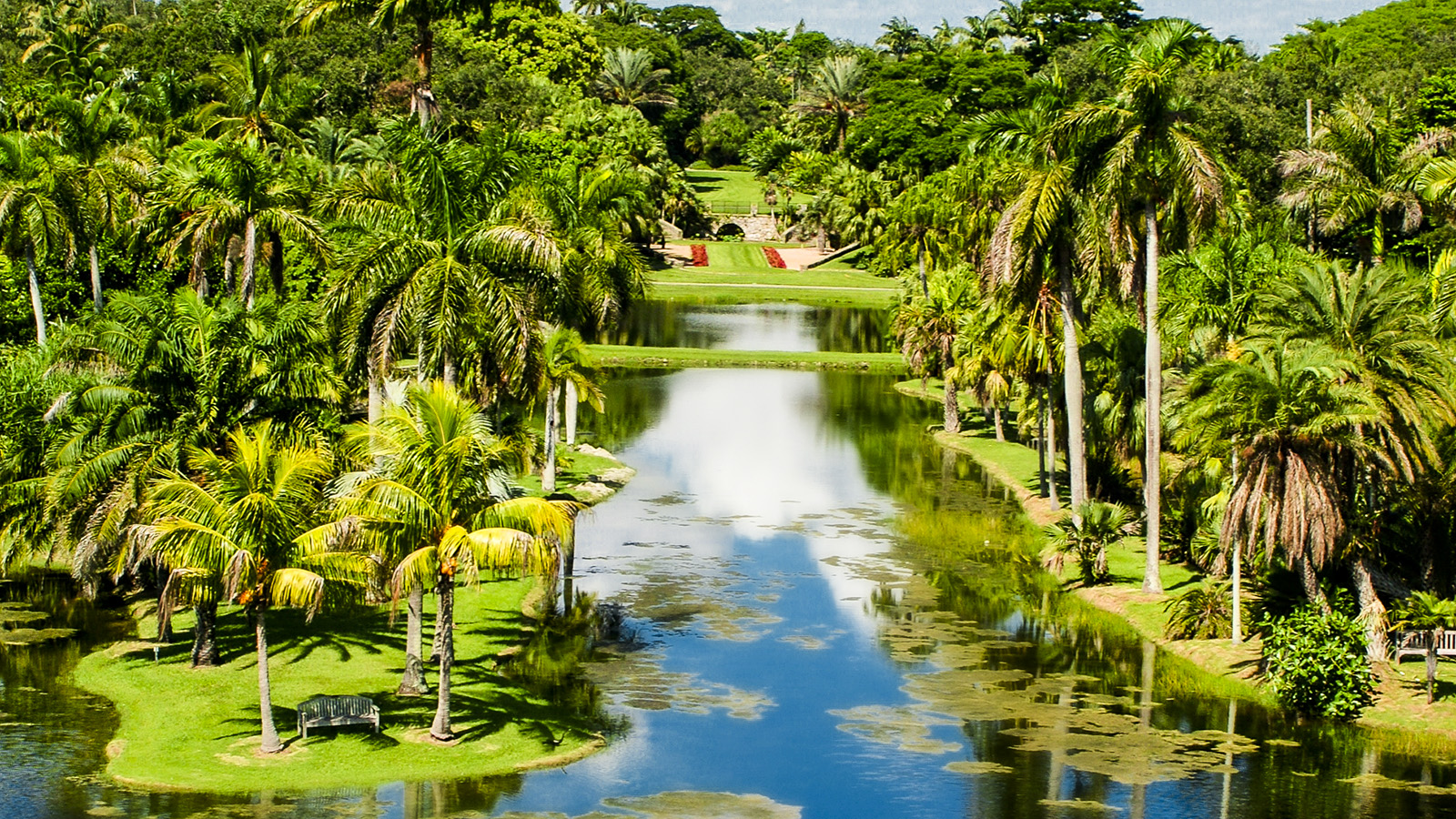
What makes Fairchild so affecting is how gently it delivers its message. You’re surrounded by abundance—towering palms, rare cycads, flowering trees that feel eternal. And yet, once you understand what you’re seeing, the illusion cracks. Many of these plants no longer thrive in the wild. Some exist here because they cannot exist safely anywhere else. Beauty, you realize, is not permanence. It is a responsibility.
Fairchild is deeply embedded in global conservation efforts, working across continents to protect biodiversity, restore fragile ecosystems, and build resilience against climate instability. This is science practiced with patience. Long timelines. Generational thinking. The kind of work that doesn’t chase recognition because it answers to something larger than visibility.
At Fairchild Tropical Botanic Garden, beauty is the invitation—but attention is the lesson.
You enter expecting color and scale. What you leave with is reverence.
Fairchild doesn’t overwhelm you all at once. It unfolds slowly, almost deliberately, as if testing whether you’re willing to notice. And once you do, the experience shifts—from pleasant to profound.
The Palm Collection: Living Memory
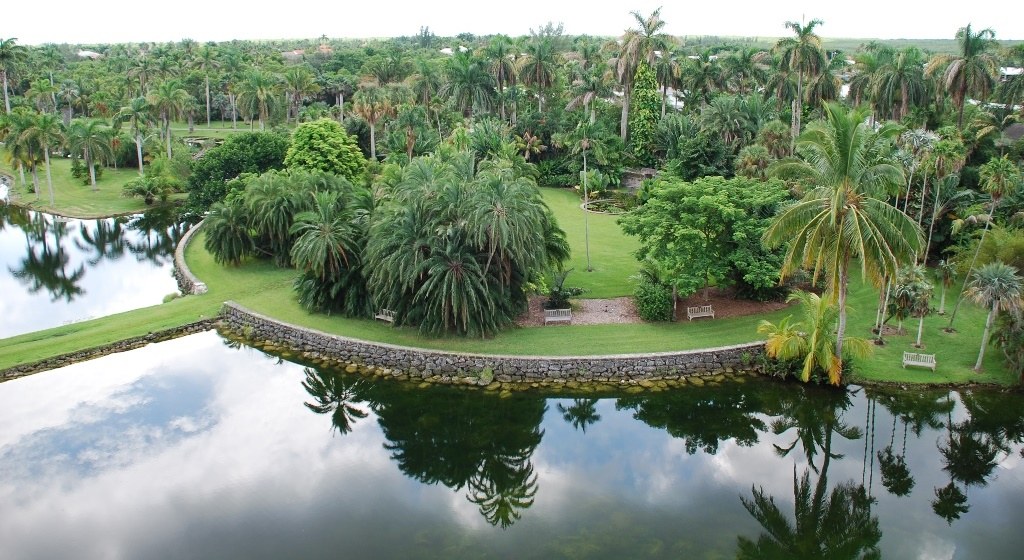
Fairchild holds one of the world’s most important palm collections, and walking among them feels strangely intimate. These are not decorative trees; they are elders. Some exist in only a handful of places left on Earth. Their trunks carry the quiet authority of time—storms survived, climates changed, habitats lost. Standing beneath them, you feel small in the best way, reminded that longevity is earned through adaptation, not dominance.
The Rainforest
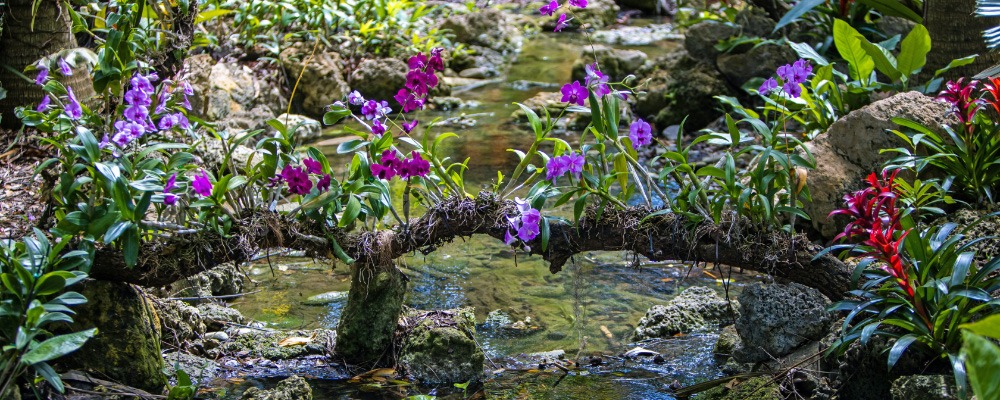
Step into the rainforest section and the air itself changes. Moist. Dense. Alive. Light filters through layers of green, and suddenly Miami disappears. This space teaches you how ecosystems speak—through interdependence. Nothing thrives alone here. Every vine, leaf, and insect plays a role. It’s a subtle but powerful reminder: resilience is communal.
The Butterfly Garden
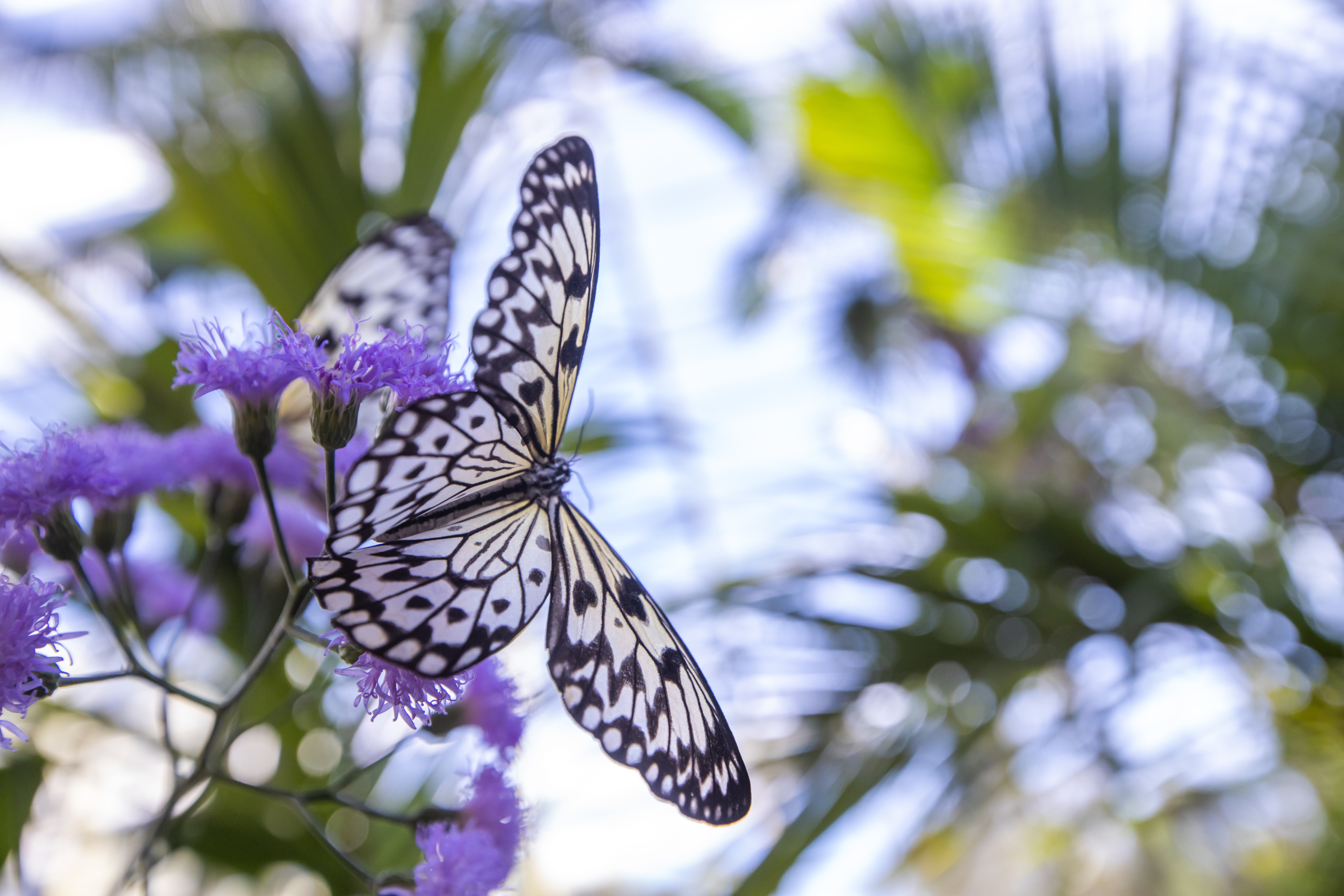
There is a moment—often unexpected—when a butterfly lands close enough that you stop breathing. Fairchild’s butterfly experience isn’t designed for spectacle; it’s designed for closeness. The wings are delicate, almost implausible, and yet purposeful. You don’t photograph this moment as much as you absorb it. Beauty here lasts seconds. That’s the point.
The Conservatory & Rare Plant Houses: Quiet Urgency
Behind glass and careful climate control live plants that cannot survive without human care. Some are extinct in the wild. This is where Fairchild’s deeper truth becomes impossible to ignore. Conservation isn’t theoretical—it’s immediate. You feel the weight of responsibility without a single word being spoken. Knowledge and disappearance are not distant concepts here; they share the same room.
Seeds, Science, and the Long View
What moves you most is what you don’t see. The seed banks. The research labs. The scientists who treat each specimen not as data, but as a promise. A future safeguarded quietly, methodically, without applause. Fairchild operates on timelines longer than trends, longer than lifetimes. It believes in tomorrow even when today feels uncertain.
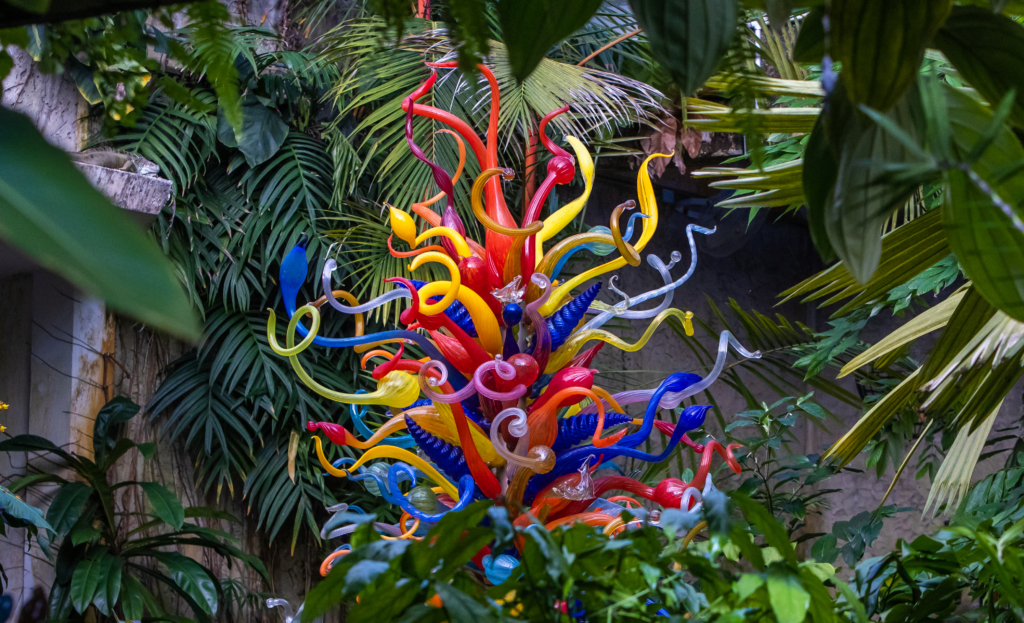
Art in Conversation With Nature
Throughout the garden, art appears—not as interruption, but as dialogue. Sculptures and installations don’t compete with nature; they respond to it. They ask you to consider how humans interpret, interfere, and sometimes protect what they did not create. It’s contemplative rather than decorative, and it lingers with you.
Fairchild doesn’t shout about climate change or extinction. It lets you feel it. Through abundance that isn’t guaranteed. Through beauty that requires care. Through science practiced as devotion.
You leave understanding something quietly radical:
That preservation is not about saving the past.
It’s about believing the future deserves witnesses.
Fairchild doesn’t ask you to panic.
It asks you to pay attention.
And once you do, the world beyond its gates never looks quite the same.
You leave changed, not because you were told what to think, but because you were allowed to see clearly. To understand that abundance is fragile. That science is an act of love. And that the future, if it is to be protected, will be safeguarded not by urgency alone—but by care, precision, and reverence for what still grows.
Fairchild doesn’t ask for admiration.
It asks for awareness.
And once you’ve walked its paths, it’s impossible not to carry that awareness with you—long after the greenery fades from view.
Fairchild Tropical Botanic Garden
10901 Old Cutler Road
Coral Gables, FL 33156
Words by Elle Taylor