Zibby Allen and the Courage to Live Gently
There are women who arrive loudly, announcing themselves to the world with certainty and sharp edges.
And then there are women like Zibby Allen — who arrive the way light does through a window you didn’t know was open.
On screen, her presence is unmistakable. As Brie Sheridan on Virgin River, Zibby brings a rare quiet strength — a tenderness that never reads as weakness, a softness that carries weight. She doesn’t demand attention; she holds it. In a series built on emotional truth and human connection, her performance feels lived-in, intimate, and deeply feminine — the kind that lingers long after the scene fades.
Off screen, that same quality follows her. Her energy isn’t performative. It’s grounded. Rooted. The kind of beauty that comes not from trying to be seen, but from having finally learned how to stand still inside herself. Watching her now — between continents, between art and love, between the woman she once imagined and the one she’s become — you feel it immediately: this is a woman no longer negotiating her worth.

Zibby’s journey is not about reinvention for applause. It’s about returning — to intuition, to nature, to softness without apology. Whether she’s embodying emotionally layered roles, crafting herbal tonics with her own hands, or building a life across oceans with the man who changed her understanding of home, her story speaks to something quietly radical: the choice to live gently in a world that rewards hardness.
This is not a conversation about fame.
It’s a conversation about grounding. About presence. About the confidence that blooms when a woman stops rushing and starts trusting the rhythm of her own life.
For our Spring INLOVE feature, we sit with Zibby Allen in a season of becoming — not louder, not bigger — but truer.
INLOVE: Your presence as Brie Sheridan on Virgin River feels both strong and deeply tender. What drew you to her emotional world, and what parts of yourself did you recognize in her?
Zibby Allen:
To be honest, what first drew me to her world was a job offer. Ha. But yes, I do believe roles find me when there’s something to learn, and I was instantly curious about Brie’s emotional interior and her particular kind of strength.
By nature, I’m deeply tender. I’m strong too—resilient, hardworking—but Brie has a strength that doesn’t suffer fools. She’s willing to make people uncomfortable, to call out injustice even when it’s inconvenient, to talk back, to take someone on, to set clear, unapologetic boundaries.
Those edges didn’t always come naturally to me when I first stepped into the role. Playing Brie has forced me to practice them. Over the seasons, I’ve learned to cultivate stronger edges—the kind I always suspected would serve me, but didn’t quite have the nerve to fully claim before.
INLOVE: Looking back at earlier seasons of Virgin River, how has your relationship with Brie evolved alongside your own personal growth?
Zibby Allen:
Brie has always been strong and capable—that’s true. But her interior world was deeply shaken by the assault. When we first meet her, she isn’t discovering strength so much as trying to reclaim a sense of self-worth that had been shattered just before she arrived in Virgin River.
And you can’t really be human—especially in this industry—without grappling with your relationship to worth. You’re constantly being judged, chosen, passed over, ranked, unranked. It’s not exactly a confidence-neutral environment.
So as Brie moves through the series, you see her make mistakes—choices that reflect how low her self-worth still is—alongside moments where she genuinely fights for herself and for the kind of love she deserves. That push and pull feels very human, and very relatable to me. Playing her over multiple seasons has naturally had me doing some of that work in my own life too, whether I mean to or not.
When you live with a character this long, the lines blur in useful ways. You don’t just play the growth—you end up absorbing some of it. And honestly, I’ll take that kind of side effect from a job any day.
INLOVE: With the new season returning, what can viewers expect emotionally from Brie this time, and how did stepping back into her story feel for you?
Zibby Allen:
Not going to lie—stepping back into Brie’s story this past year was uncomfortable. She starts the season at an intensely low point. She doesn’t know what she wants or needs, she’s cheated on Mike, she’s emotionally entangled with two men who love her and whom she’s hurt… the girl is not feeling great about herself.
So emotionally, viewers can expect everything that comes with having to reckon with your own choices—the shame, the confusion, the self-interrogation—and that ongoing tug-of-war between her head and her heart. It’s rocky terrain. (It would be for anyone.)
But the thing I personally love about Brie is that she doesn’t run from the fight. Even when it’s lonely or uncomfortable, she shows up and faces it. Stepping back into that kind of honesty, even when it’s messy, felt really achy as the actor—but ultimately meaningful to play.
INLOVE: Virgin River resonates because it’s about connection, healing, and chosen family. Why do you think this show continues to touch so many people so deeply?
Zibby Allen:
For exactly those reasons. Things are pretty gnarly in our world right now. We’re living in a very loud, volatile, divisive moment—culturally, politically, globally. It’s truly upsetting, painful, and exhausting.
But I don’t care what your deal is—if you’re human—at the end of the day your greatest currency, and the greatest unifier of all, is still connection, care, being seen, and the kind of healing that comes from true community. Those qualities cut across beliefs, opinions, and all the noise.
I really do believe Virgin River reflects that in a very real way. It reminds us what it feels like to be held up by a chosen family, to belong somewhere, to soften a little. It makes total sense to me that people are craving and loving a show like that right now. I’m proud to be part of it.
INLOVE: You’ve spoken about entering a more grounded, folklore-inspired chapter of your life. What does that grounding feel like in your body, not just in your work?
Zibby Allen:
For me, grounding has a lot to do with balance—between the part of me that creates and does, and the part that needs the not-doing. I’m naturally generative and engaged with the world, but I’ve learned that if I’m always giving myself away—online, publicly, energetically—I lose something essential. I do not thrive when I feel like I have to show or prove what I’m up to.
Grounding feels like intentionally turning the volume down on the outer world so I can better attune to my inner one. In my body, it’s a real downshift. I feel steadier, less braced, more anchored to my own inner knowing.
I spend more time in nature, with books, studying herbs—even just going for walks—being somewhere I don’t have to perform. Scotland has been a big part of that. We live in Edinburgh part-time, my husband is from this part of the world, and our community here relates to me as a human first, which I’m deeply grateful for. Something about this place allows my whole system to settle.
Fine-tuning who I am offstage has become just as important as what I do onstage. The more space I create for that inner anchoring, the more present and potent I feel when it is time to step forward.
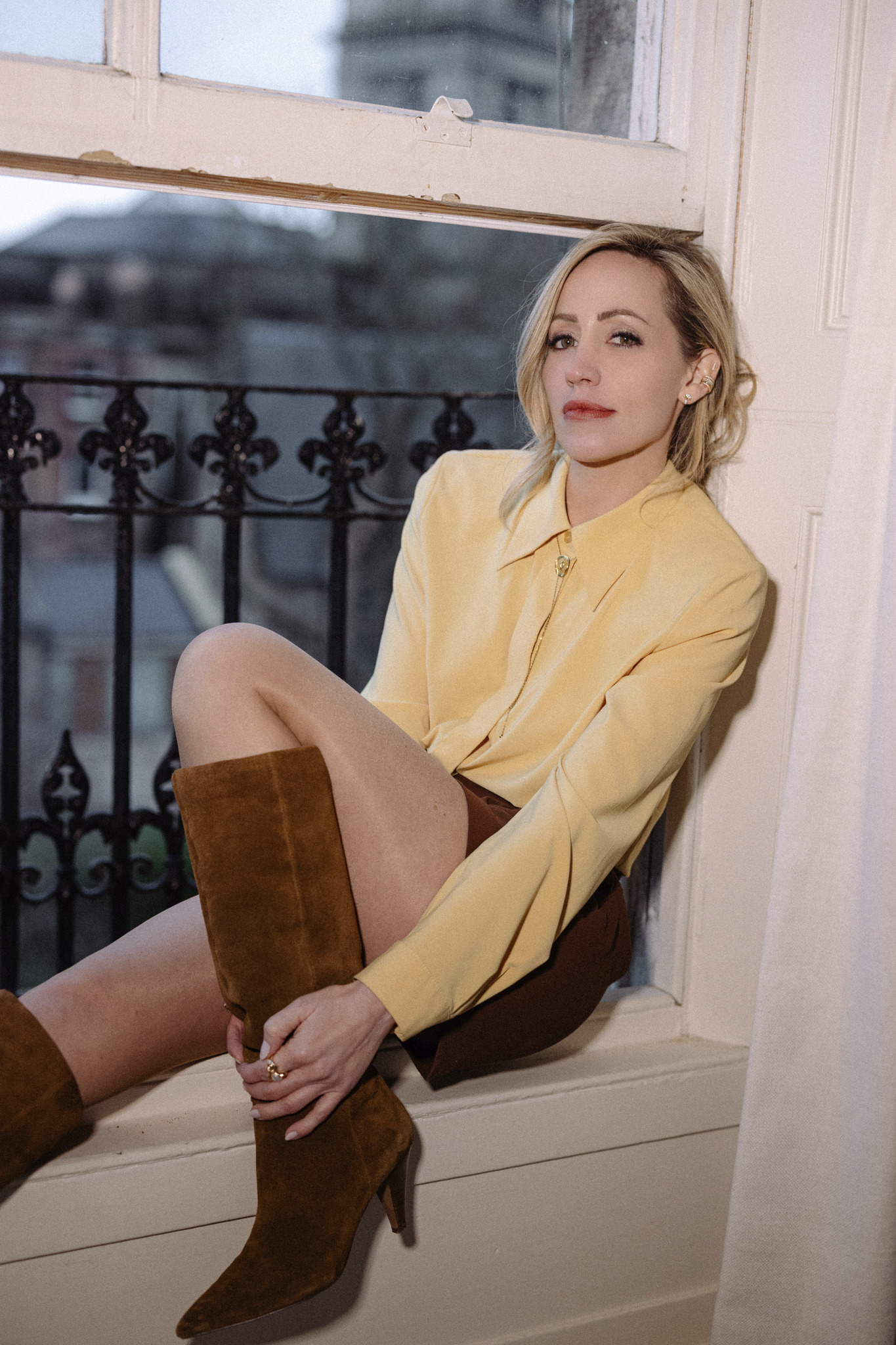
INLOVE: Living between places often reshapes identity. How has Scotland—and the land itself—changed the way you see yourself as a woman and an artist?
Zibby Allen:
Living between different countries keeps me from ever mistaking my reality for the reality. Each place has its own language, social cues, humor, politics, and emotional temperature, and moving between them keeps me observant. Curious. A little unfixed. I don’t get too attached to a single version of myself.
Scotland, in particular, has been formative for me. I have family lineage here, and whether that’s genetic memory or something more mysterious, it genuinely feels like home—which I never expected growing up in California.
I’m drawn to the landscape: dramatic, textured, sometimes extreme. And living in Edinburgh, where history and architecture are everywhere, I’m constantly confronted with the passage of time. For someone who’s always been a bit achy around that subject, it’s quietly confrontational—in a way I apparently like. Haha.
Spending time here has softened my resistance to time and deepened my relationship with it. I get frequent pangs of “nowstalgia”—moments where I’m so in love with the present that I almost ache for it, as if it’s already a memory.
The culture, the poetry, the sense of story embedded in the land have helped me embrace the kind of woman and artist I am—someone drawn to beauty and difficulty, to storytelling that holds pain and celebration at once.
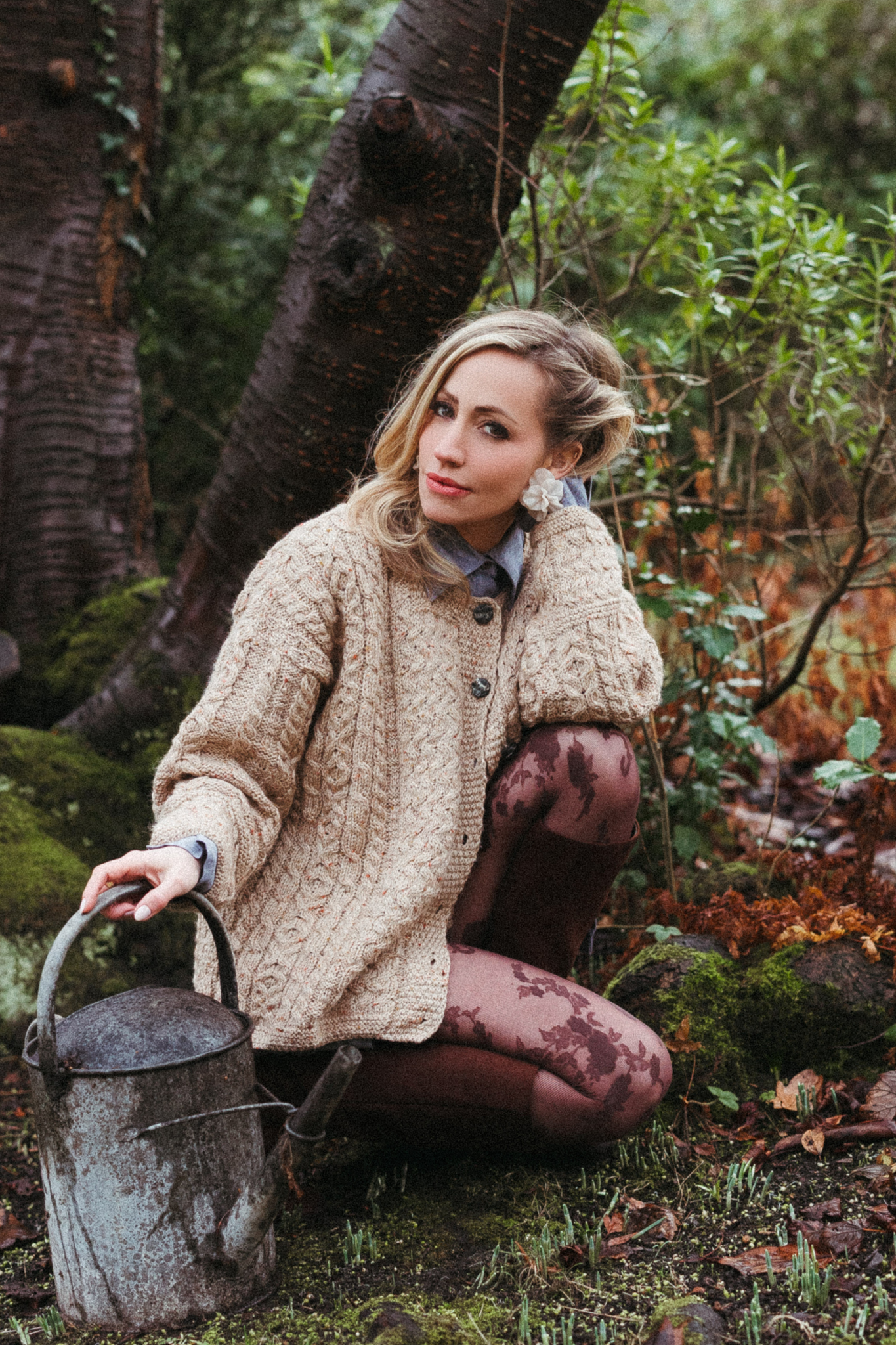
INLOVE: You once believed marriage wasn’t for you. What shifted internally when love met you in a way that felt like home instead of compromise?
Zibby Allen:
It’s true—I didn’t really like the idea of marriage for myself. Mostly because I didn’t have many models of it that looked appealing. I’ve always struggled with cultural assumptions around marriage and how quickly it can become a setup for unrealistic expectations or identity stagnation.
What changed was meeting Adam and feeling inspired—and allowed—to redefine what marriage could be for me. Once I did that, I felt curious about the tradition instead of resistant to it.
In our marriage, we’re genuinely interested in learning and growing through the framework of marriage. We’re curious about the long-term benefits of the practice of marriage—how individuality can continue evolving within commitment.
We’re willing to risk a sense of security in exchange for staying awake, curious, and a bit mysterious to ourselves and to each other. Not exactly the reasons most people get married, maybe—but it’s made me love being married to Adam Blair.
INLOVE: Long-distance love asks for faith, patience, and trust. What did that season teach you about surrender versus control?
Zibby Allen:
The distance was actually kind of amazing. It meant we were limited to conversation—really getting to know one another—in a way I don’t always allow myself. I connect quickly, sometimes too quickly. I’m a lover, a sensualist—always have been.
That long-distance buffer gave me pause. It gave me time to integrate what I was feeling without rushing ahead or over-committing before I felt certain.
The distance forced surrender. I couldn’t make anything happen or speed things up. All I could do was trust that if it was right, it would hold—and if it wasn’t, it wouldn’t. That lack of control ended up strengthening our foundation more than anything else.
INLOVE: Your connection to wellness feels deeply intuitive rather than trend-driven. When did you first realize that nature was part of your language?
Zibby Allen:
I realized early on that nature wasn’t something I was turning to—it was something I already spoke. I’ve always been extremely sensitive to my environment and my body. Long before I had language for “wellness,” I was paying attention to what made me feel better.
Herbs became a natural extension of that. They’re accessible, endlessly useful, and where I’ve seen the most meaningful health results—when integrated intuitively, not rigidly.
In a world full of beauty trends—which honestly stress me out—working with herbs and nature helps me tune out the noise and listen to something quieter inside my body.
INLOVE: Creating herbal tonics is an act of care. Do you see that practice as creativity or self-rescue?
Zibby Allen:
Both. Absolutely both.
I could study herbs for another twenty years and still barely scratch the surface. There’s something endlessly creative about making tinctures, infusions, and tonics.
And yes—it’s also self-rescue. Hell yes. I have infusions for stress, nervous-system recovery, hormones, sleep, digestion—you name it. Sometimes creativity and survival are the same thing.
INLOVE: As an actress, you’ve lived many lives. How do you now protect your inner life from being consumed by performance?
Zibby Allen:
I protect my inner life by building a world that doesn’t require performance—relationships, environments, and daily practices where there’s nothing to prove.
I still notice the urge to post or signal sometimes. Instagram is basically a performance venue, and I do participate—sporadically. Very sporadically. I need far more time living inside my inner world than the algorithm would ever approve of.
That balance—showing up when it matters while staying rooted in a life that asks nothing of me—is how I keep performance from consuming the person underneath.
INLOVE: You’re co-producing work rooted in purpose and philanthropy. How has grief shaped your understanding of legacy and meaning?
Zibby Allen:
After a tragic loss in my life, I find myself continually drawn to stories about love, grief, and loss. I’m still in conversation with grief—still searching for understanding.
Losing my older brother, one of the great loves of my life, tore a hole through me that will never fully close. I’m learning that the only way to tend to a loss like that is to acknowledge it and fold it into the lived reality of being human.
Grief has taught me that meaning doesn’t come from erasing pain, but from allowing it to exist honestly. If my work creates space for others to carry grief without shame, that feels genuinely purposeful to me.
Legacy matters less. When meaning is present, I think legacy tends to take care of itself.
INLOVE: There’s a quiet confidence about you now. What did you have to release to arrive here?
Zibby Allen:
I had to unsubscribe from the idea that there’s a universal scale of value. There is no measuring stick for worth. I’ve also had to release self-shame—both inherited and learned.
I often reread a Rumi poem called “This One Is Mine.” It’s a reminder not to outsource your worth. Letting myself be seen, even when it feels painfully vulnerable, grew out of that belief.
If that reads as quiet confidence, maybe that’s what it is. It’s still very much a work in progress.
INLOVE: What does it truly mean for you to be in love—lived, steady, and real?
Zibby Allen:
Being in love feels steady. Not competitive. Not demanding. It’s kind, respectful, and energizing.
I pay close attention to balance. Love can exist when care flows one way—but it can’t work like that. Real love has reciprocity, curiosity, listening, and repair.
And honestly, it’s usually pretty quiet. If there’s ease, mutual investment, and no sense of bracing or resentment—that’s how I know it’s real. The rest tends to be louder.
There is something quietly powerful about a woman who chooses alignment over urgency. Who allows love to soften her instead of sharpen her. Who trusts that stillness can carry just as much strength as striving.
Zibby Allen reminds us that growth doesn’t always announce itself. Sometimes it arrives gently — like breath returning to the body, like roots finding soil, like a woman finally living in rhythm with herself.
And in that gentleness, something extraordinary begins.
Words by Elle Taylor