Iris van Herpen exhibition Sculpting the Senses at the Brooklyn Museum feels less like a fashion exhibition and more like entering another dimension where haute couture, art, science, and nature dissolve into one extraordinary experience.
Walking into Brooklyn Museum for Iris van Herpen: Sculpting the Senses did not feel like entering a fashion exhibition. It felt like stepping inside the nervous system of an artist who no longer recognizes the boundary between haute couture, science, technology, nature, mythology, and contemporary art.
I have attended enough exhibitions, runway shows, installations, and art fairs to recognize when something is visually beautiful yet emotionally empty. This was not that. This was one of the rare moments where fashion ceased behaving like luxury commerce and returned to its oldest purpose: transformation.
The atmosphere inside the Brooklyn Museum carried an unusual stillness. Not silence exactly. It felt like entering transcendence. A spiritual suspension from ordinary life. The kind of experience that quietly lifts you out of the noise of the world and places you somewhere softer, deeper, almost otherworldly.
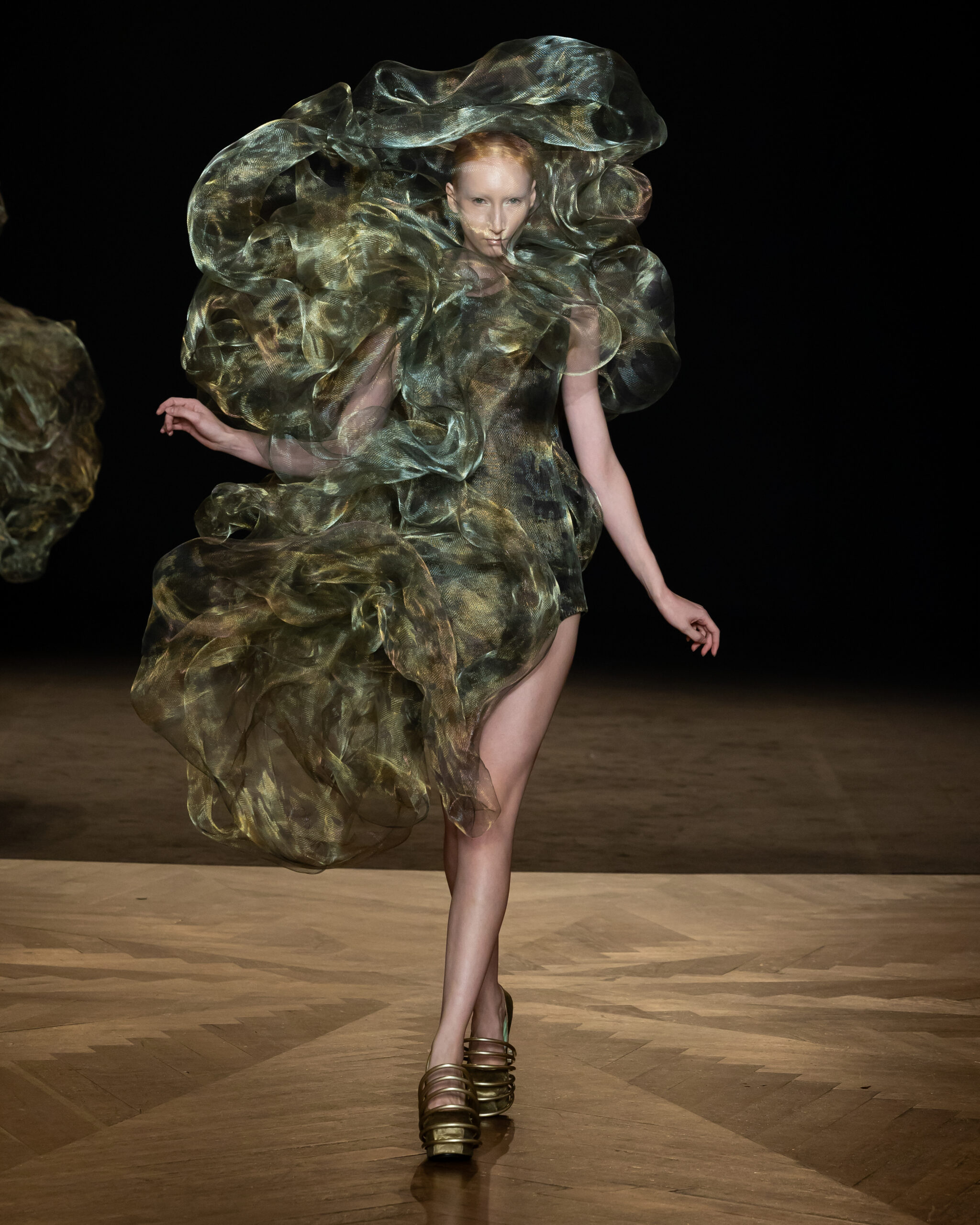
Every garment demanded observation from impossible angles because no single perspective could fully explain what you were seeing. The pieces shifted between sculpture, anatomy, water, movement, and dream. Nothing remained static. Even standing still, the work felt alive.
And then, almost without announcement, Iris van Herpen was simply there. Sitting humbly at a table weaving fabrics with her hands directly in front of us, entirely immersed in the process itself. Just quiet concentration and creation unfolding in real time.
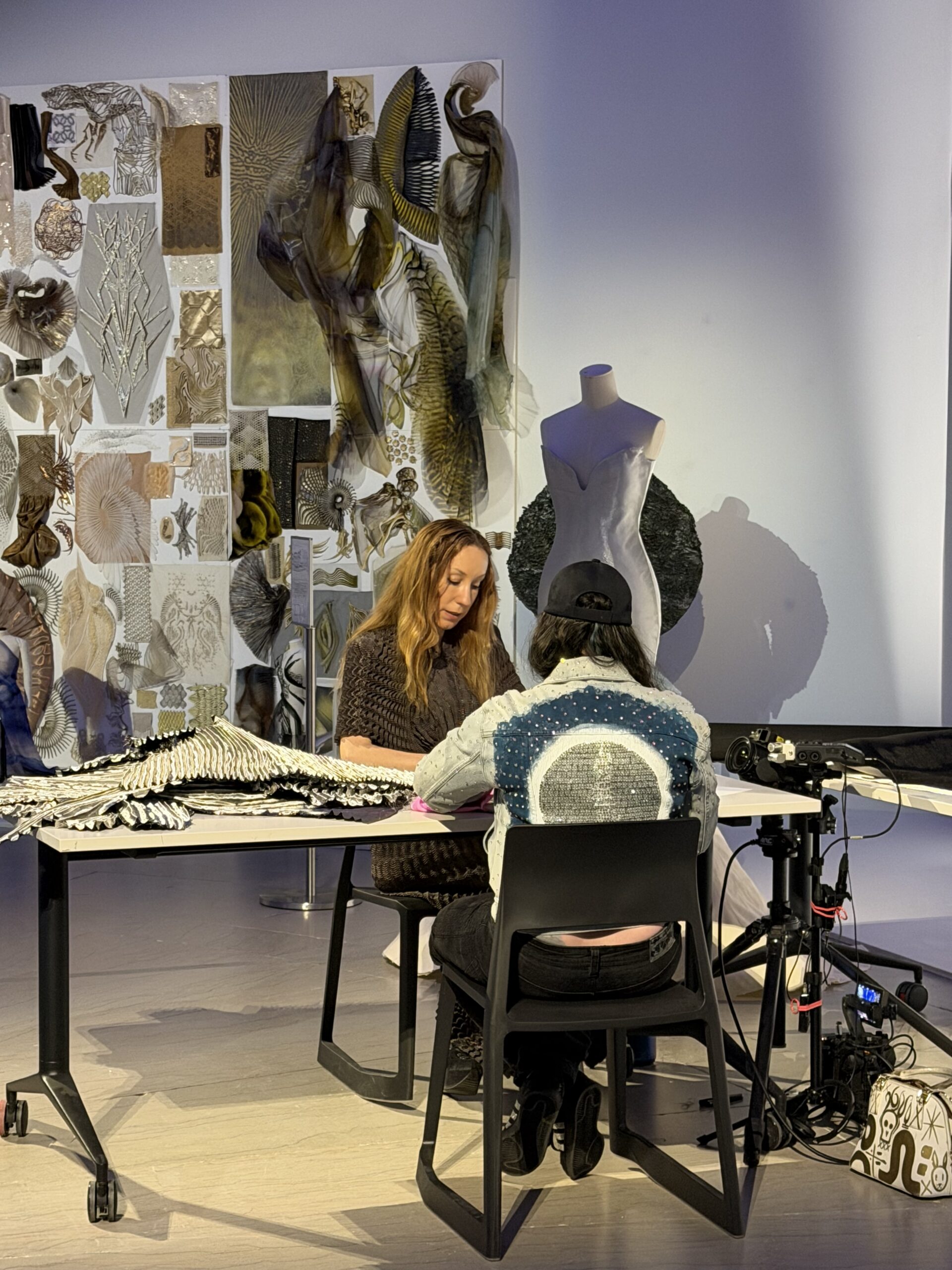
Watching her work became one of the most moving parts of the entire exhibition.
There was something deeply intimate about witnessing the origin of these extraordinary forms through such delicate human gestures. Her hands moved slowly through layers of material as though she were composing music rather than constructing couture. Threads, textures, translucent structures, experimental fabrics — everything seemed to emerge organically beneath her fingertips.
In that moment, the exhibition revealed its true heart.
This was not fashion chasing attention. This was devotion to craft.
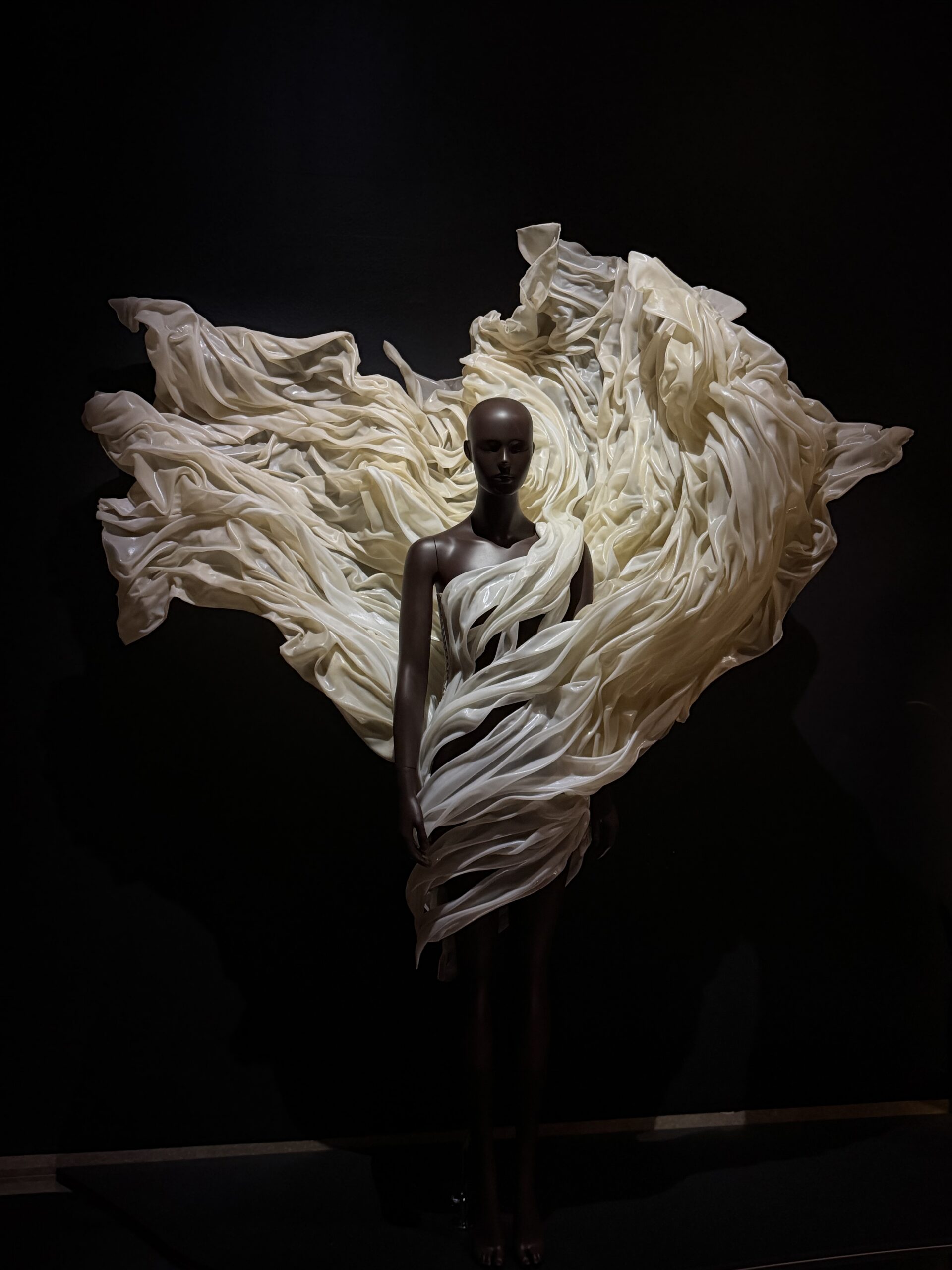
Opening May 16, 2026, Iris van Herpen: Sculpting the Senses marks the North American debut of the internationally celebrated exhibition featuring more than 140 haute couture creations alongside contemporary art, scientific artifacts, immersive installations, and experimental textile innovation. The groundbreaking exhibition explores Van Herpen’s ongoing dialogue between traditional craftsmanship and emerging technologies including 3D printing, laser cutting, kinetic structures, silicone molding, sustainable materials, and digital fabrication.
But facts alone cannot explain what happens emotionally inside these galleries.
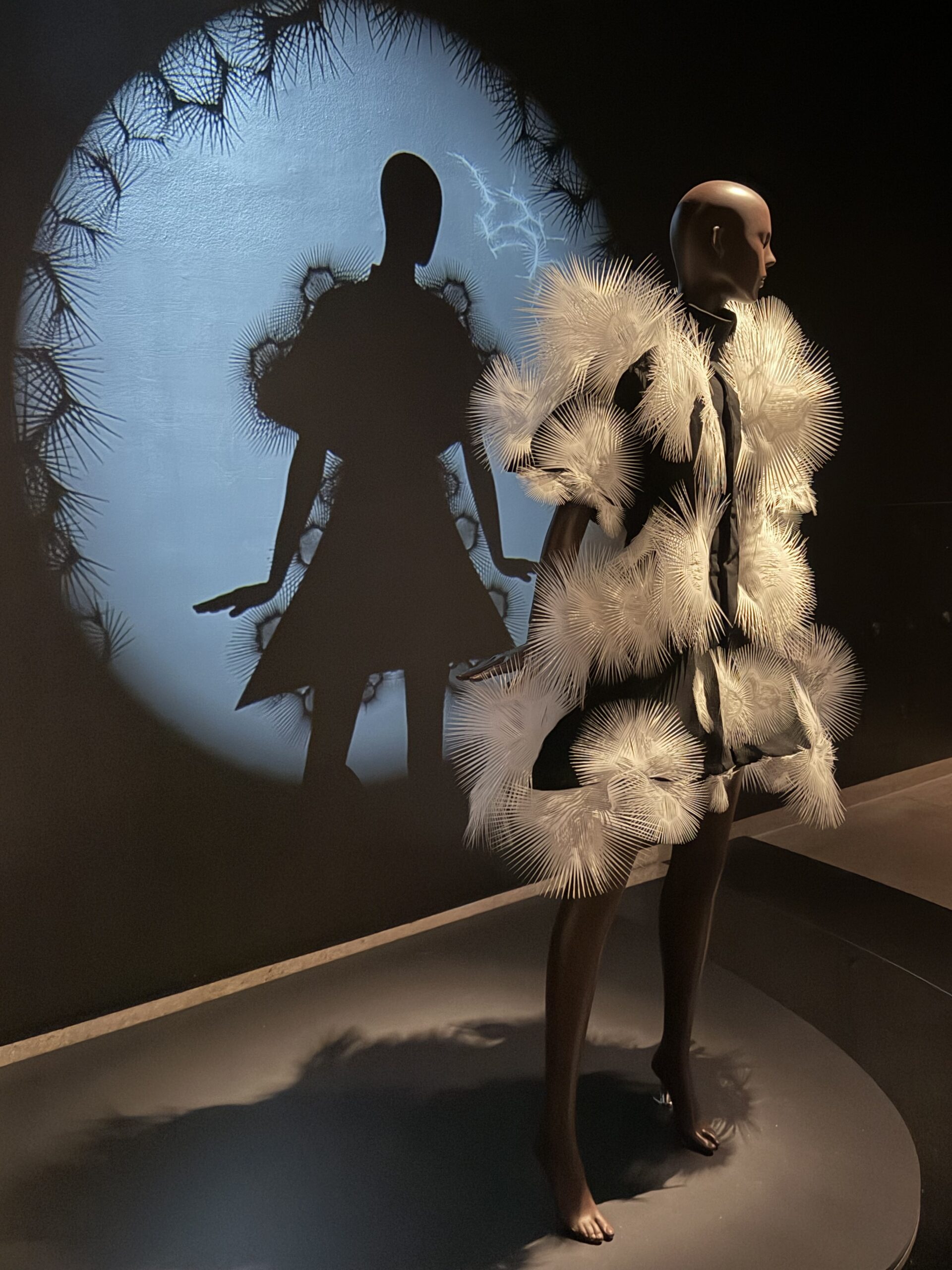
One room explored water and dreams. Another sensory sea life. Another invisible biological structures. Another mythology and fear. The exhibition unfolded almost like chapters of consciousness itself. Each gallery carried its own psychological atmosphere while remaining connected through Van Herpen’s obsession with movement, transformation, and the architecture of nature.
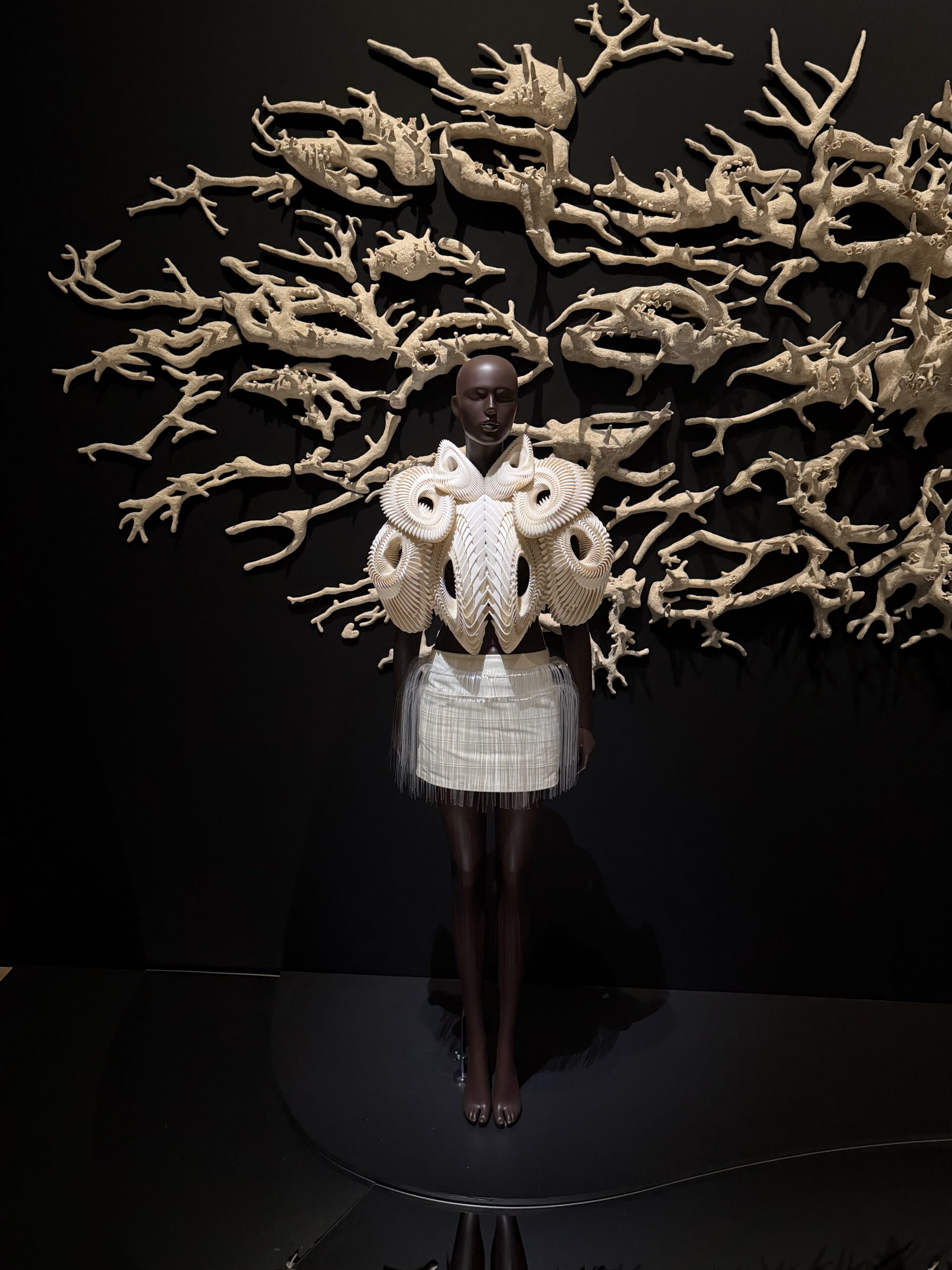
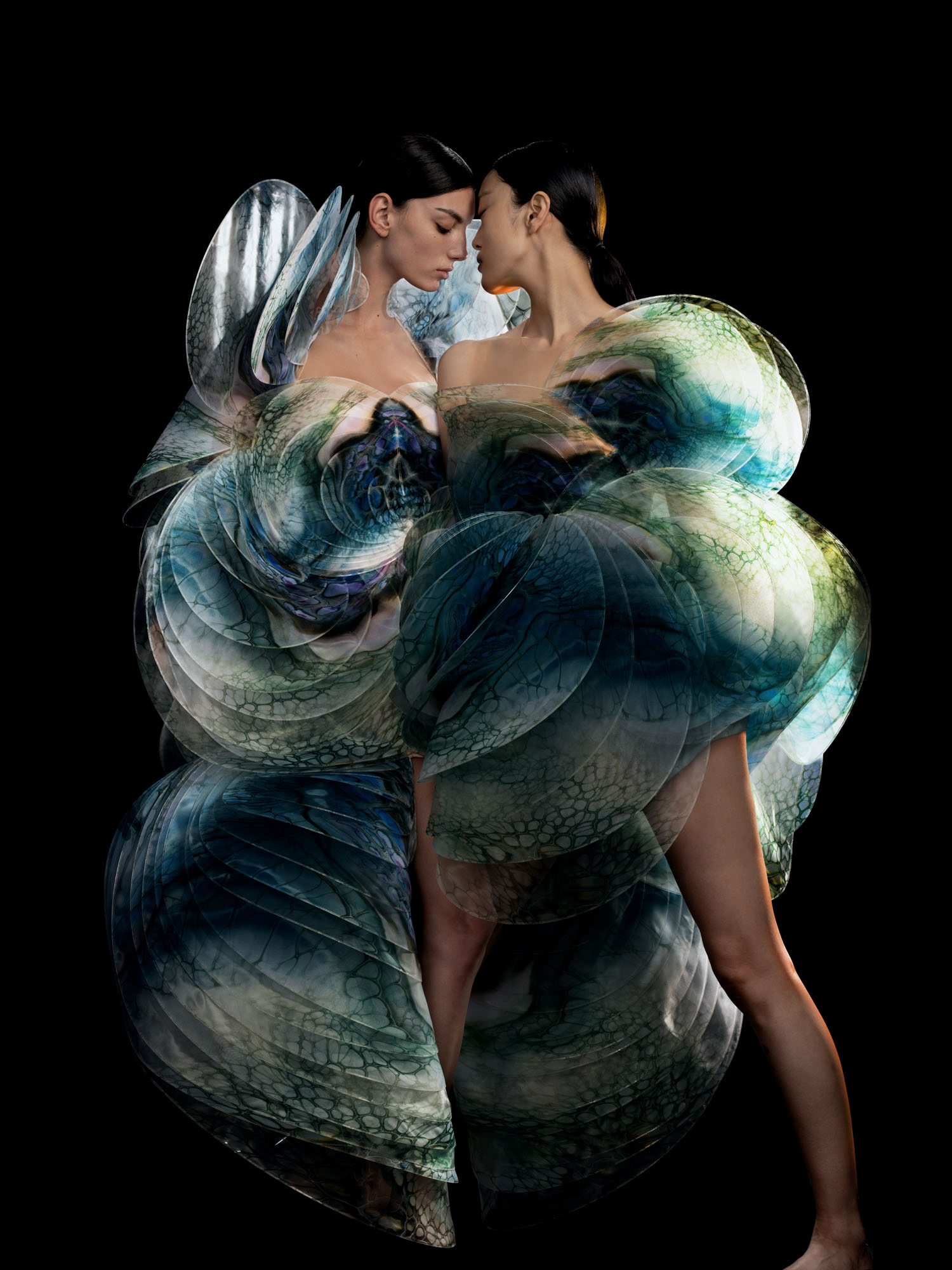
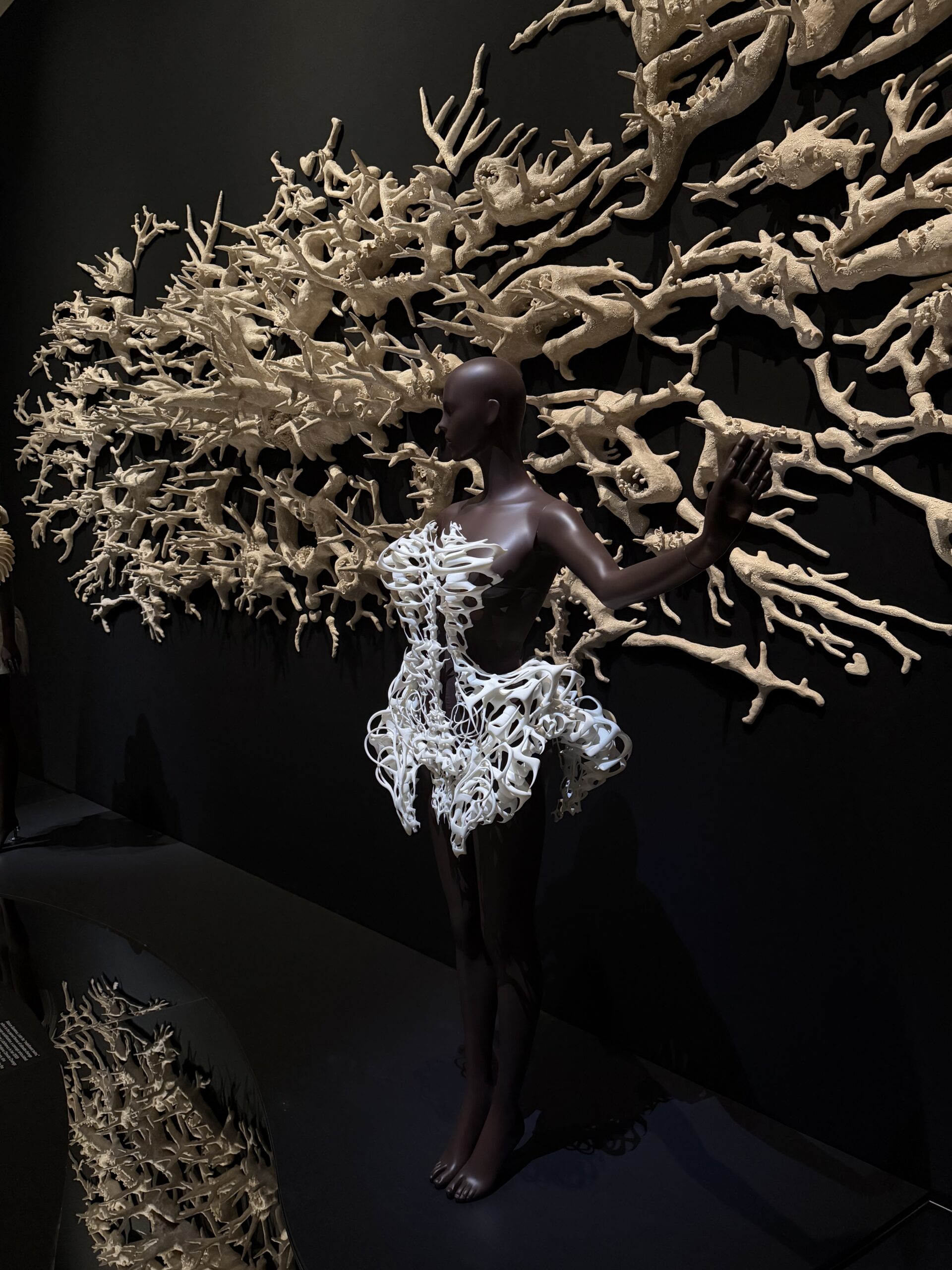
Standing before the pieces inspired by oceans and marine organisms, I kept thinking about how little human beings truly understand about the natural world. Her garments resemble coral systems, translucent jellyfish membranes, fossils, vapor, skeletal formations, microscopic organisms, and underwater ecosystems suspended in motion.
Some looked as though they had emerged from underwater civilizations. Others resembled futuristic species not yet discovered.
Yet despite the technological complexity, nothing felt cold.
That is what separates Iris van Herpen from many designers experimenting with fashion technology and AI-inspired aesthetics. Her work retains soul. The garments breathe. They pulse. They appear alive.
One of the most unforgettable moments came during the atelier presentation, where Van Herpen revealed the developmental process behind the collections. Material experiments lined the walls like scientific specimens from another century. Pleated structures, silicone molds, translucent textures, laser-cut layers, kinetic surfaces, and microscopic details expanded into monumental silhouettes.
She described how collections begin not through certainty, but through experimentation.
There was something deeply moving about hearing her discuss creation not as perfection, but as discovery.
In an industry increasingly driven by algorithms, trends, and disposable visual culture, her work insists upon patience. You cannot scroll through these garments. You must study them.
And perhaps that is why the exhibition feels emotionally overwhelming. It reminds us what human imagination is still capable of when untouched by cynicism.
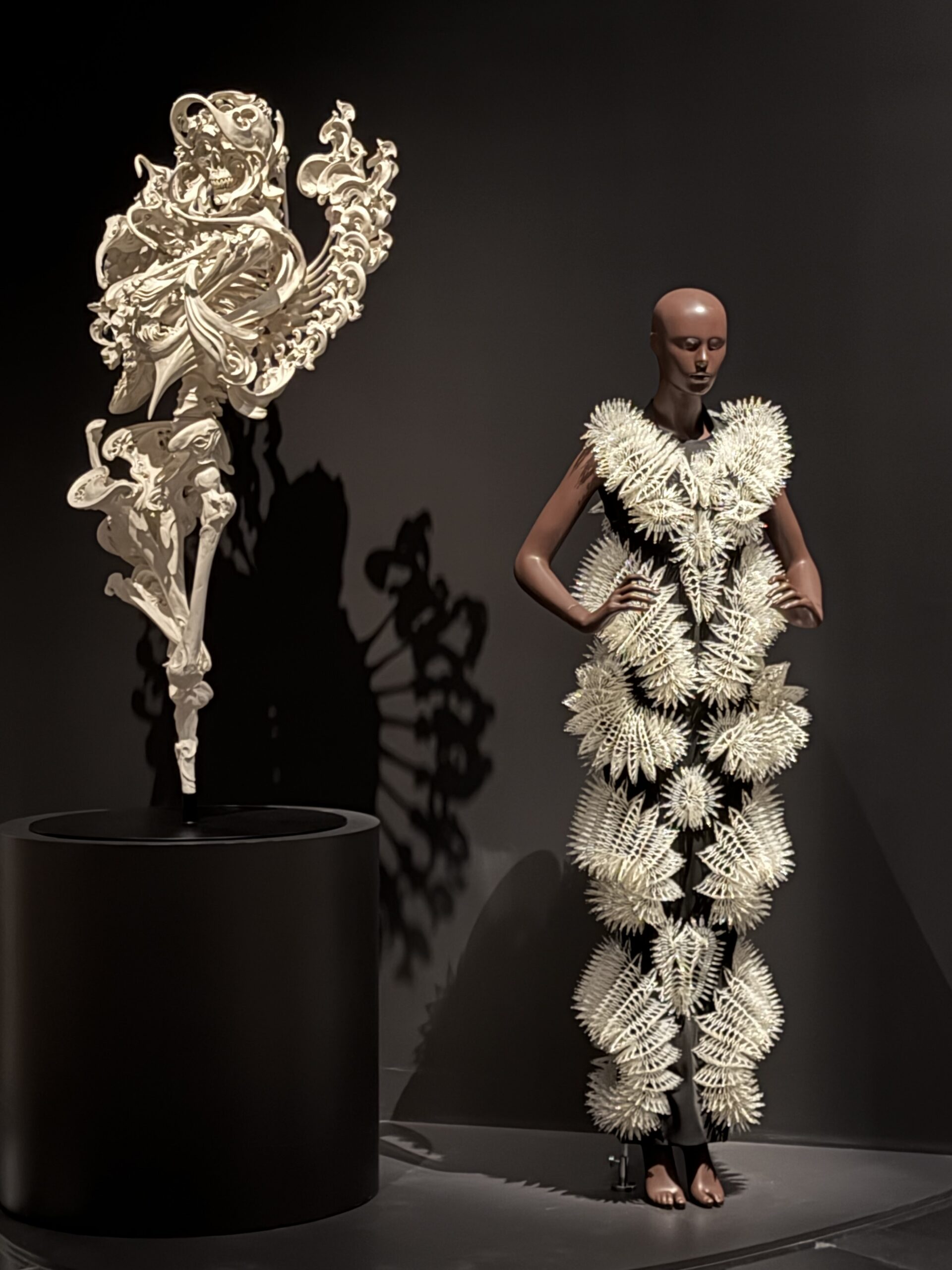
Fashion often claims to be art. Very rarely does it achieve the emotional and intellectual depth required to stand beside sculpture, architecture, painting, cinema, or music. Iris van Herpen does not merely achieve it. She transcends the category entirely.
Her creations belong equally inside museums of natural history, contemporary art institutions, scientific archives, and futuristic laboratories. She collaborates with architects, engineers, biodesigners, mathematicians, scientists, and artists, transforming couture into an interdisciplinary language between art, science, sustainability, innovation, and design.
What struck me most throughout the exhibition was her relationship with nature.
Not decorative nature. Not floral embroidery pretending to reference the earth. Actual structural observation. The geometry of plankton. Morphogenesis. Honeycomb architecture. Fossils. Coral reefs. Water in liquid, vapor, and crystalline forms. Cellular movement. Biological systems invisible to the naked eye.
She studies nature not as surface inspiration but as intelligence.
And because of that, the work never feels artificial despite its futuristic materials and cutting-edge technology. It feels eerily organic, as though these forms already existed somewhere beneath oceans or inside dreams long before humanity developed the materials capable of recreating them.
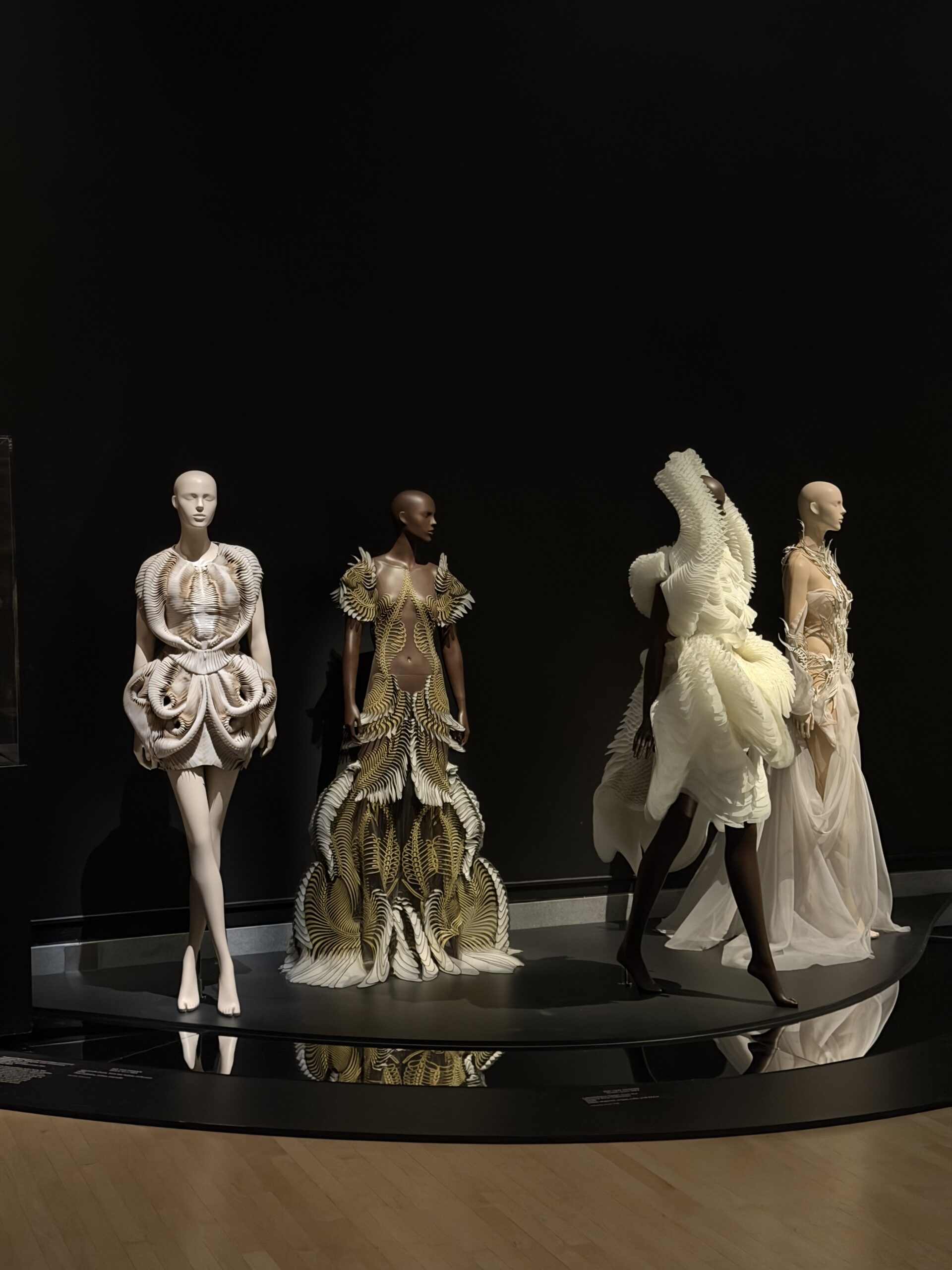
At moments, the exhibition became almost spiritual.
One dark gallery exploring mythology and fear carried imagery reminiscent of surrealist art and ancient mythologies. The garments appeared like mythological creatures mid-transformation. There was beauty inside the distortion. Fragility beside danger. The work confronted the instability of modern existence while simultaneously revealing its strange magnificence.
I found myself thinking repeatedly about the female body and how fashion historically has attempted to discipline it, decorate it, commodify it, and reduce it into trend cycles.
Van Herpen does none of those things.
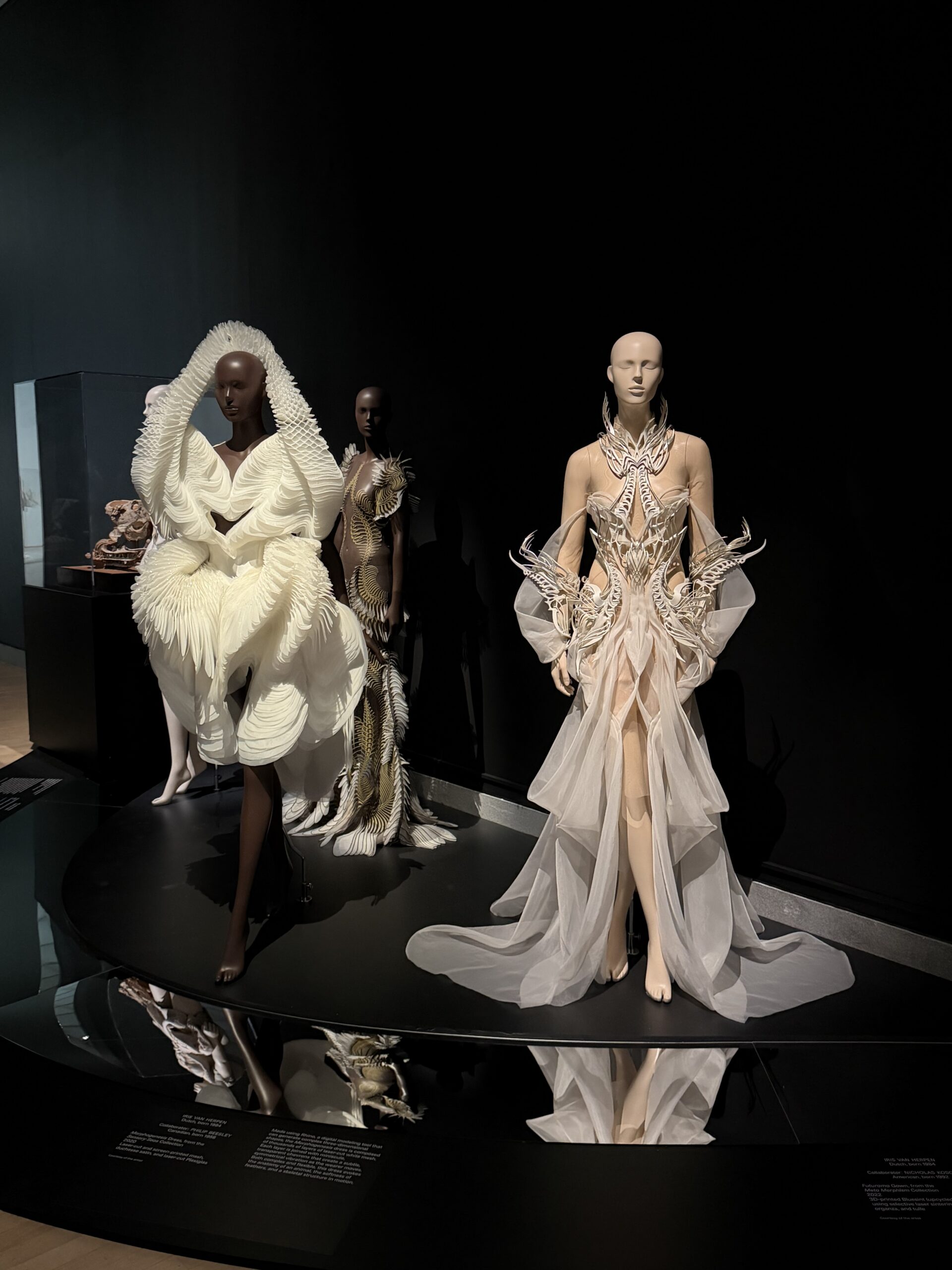
Her garments do not imprison women inside beauty standards. They expand women into forces of nature themselves. The body becomes water, smoke, skeleton, architecture, movement, atmosphere, evolution.
The pieces feel less worn than inhabited.
That distinction matters.
Perhaps that is why so many people inside the museum appeared emotionally affected rather than merely impressed. The exhibition does not invite passive admiration. It pulls viewers into questions much larger than fashion itself.
What does it mean to evolve?
Where does nature end and technology begin?
Can craftsmanship survive automation?
How do we preserve wonder in an age obsessed with speed?
What happens when science becomes emotional rather than clinical?
Even the physical construction of the garments felt impossible. Some floated around the body like frozen sound waves. Others resembled liquid suspended in air. Light moved through translucent structures with the delicacy of underwater reflections. Certain couture pieces appeared almost weightless despite immense technical complexity.
And yet nothing felt forced.
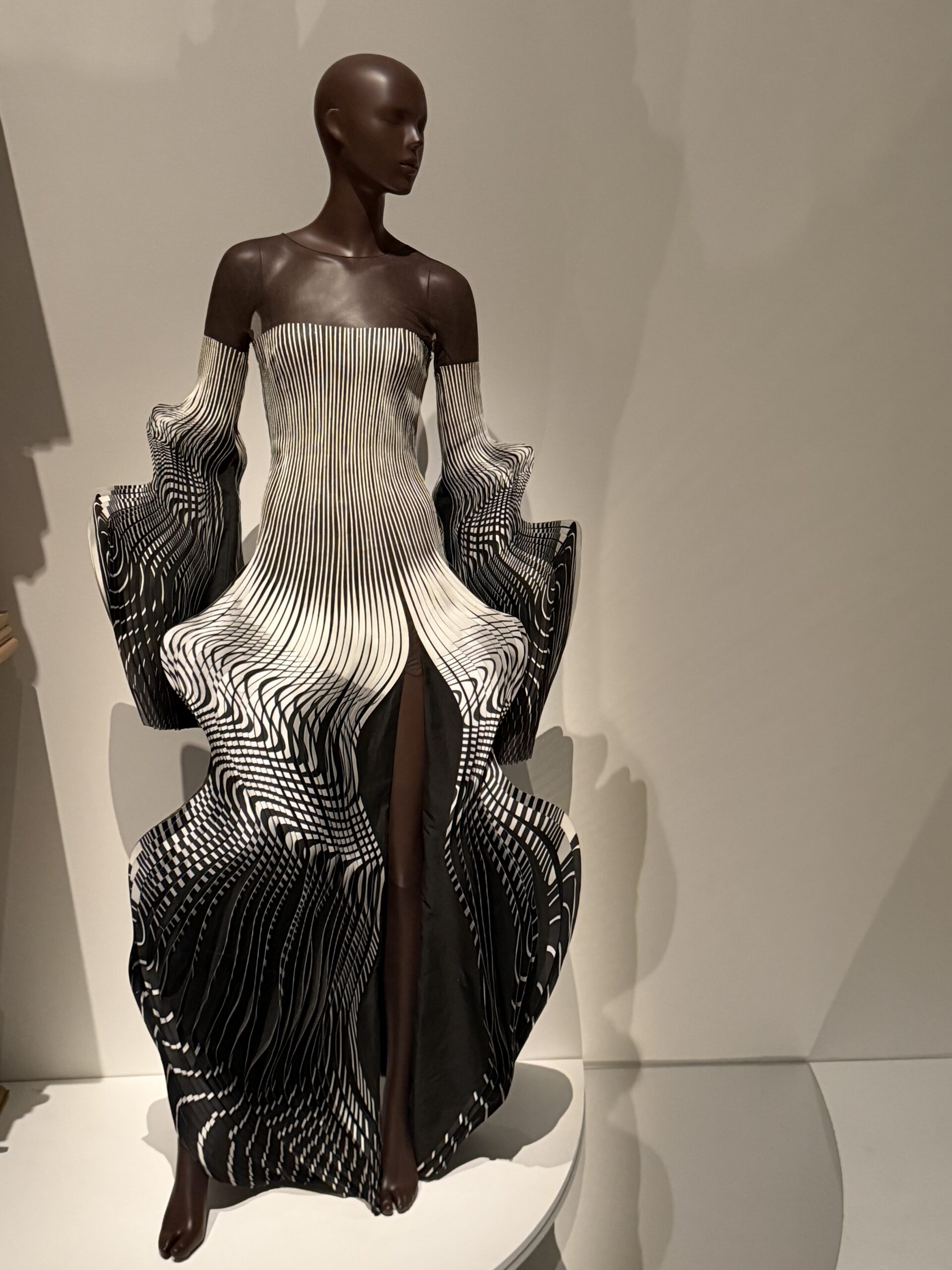
Many avant-garde fashion exhibitions overwhelm viewers through excess. Here, despite the complexity, there remained restraint. Precision. Elegance. Emotional intelligence.
I kept returning mentally to one phrase Van Herpen used while discussing her process: craftolution.
A merging of traditional craftsmanship and future technologies.
It perfectly describes the emotional tension inside the exhibition. This is not technology replacing humanity. It is technology in service of human imagination.
The result feels almost post-human in the most beautiful sense. Not dystopian. Evolutionary.
There was also something profoundly hopeful about witnessing such intellectual ambition inside contemporary fashion during a moment when much of culture feels flattened by sameness. So much modern luxury has become repetitive branding disguised as creativity. Sculpting the Senses rejects repetition entirely. Every piece carries genuine inquiry.
Nothing here was created merely to sell.
Everything was created to explore.
As someone who has spent years around artists, galleries, fashion houses, museums, and creative institutions, I understand how difficult it is to produce work that remains emotionally sincere once global recognition arrives. Success often calcifies artists into versions of themselves audiences already understand.
Iris van Herpen continues moving forward instead.
That courage is visible in every room.
By the end of the exhibition, I realized I had stopped thinking about fashion altogether. I was thinking about fragility. Nature. Mortality. Curiosity. Water. Human invention. The future of beauty itself.
That is what extraordinary art does. It expands the conversation beyond its medium.
Leaving the Brooklyn Museum, New York itself felt altered somehow. The noise outside seemed harsher after spending hours inside worlds built from silence, experimentation, and impossible delicacy.
Yet I also carried something with me: a renewed belief that beauty still matters deeply when created with intelligence, emotional depth, and soul.
Iris van Herpen: Sculpting the Senses is not simply one of the best fashion exhibitions in New York City this year. It is an immersive contemporary art experience that redefines the future of haute couture, wearable art, sustainable fashion innovation, and museum storytelling itself.
And in a cultural moment starved for genuine wonder, that may be the rarest luxury of all.
Words by Elena Vasilevsky