Paris in spring is not a season. It’s a language.
It speaks in the soft shock of green returning to the Tuileries, in café chairs angled toward the sun like worship, in the way the city exhales after winter—slowly, deliberately, as if beauty is a daily ritual and not a rare event. In spring, Paris doesn’t try to impress you. It simply remembers itself. And if you’re paying attention, you remember yourself too.
There are hotels that help you see Paris. And there are hotels that become part of what you came to find—an atmosphere, a mood, a private version of the city that feels less like tourism and more like belonging.
Château Voltaire is that kind of address.

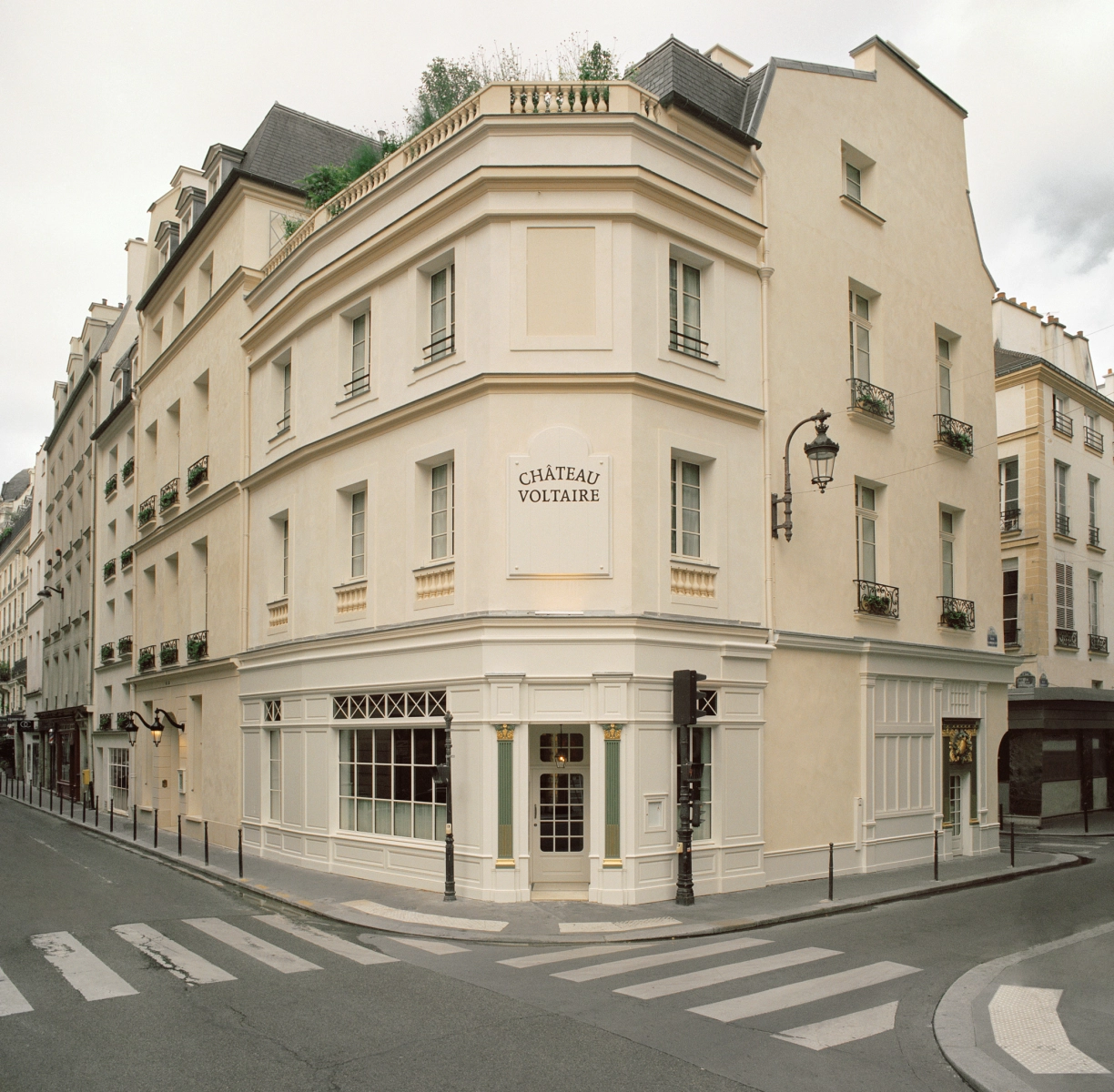
Tucked between the Opéra, the Tuileries Garden, and the Louvre, Château Voltaire sits in a pocket of Paris that feels quietly powerful—historic, elegant, and impossibly walkable. It’s the sort of neighborhood where the sidewalks look polished by centuries of intention. Where mornings feel editorial. Where you can disappear into art and reemerge on Rue Saint-Honoré with a new perfume on your wrist and a new thought in your mind.
And then you realize: the real luxury here is not that you’re close to everything. It’s that you don’t feel rushed by any of it.
A Five-Star Inn With the Soul of Old Paris
Château Voltaire describes itself as a five-star hotel with the atmosphere of an elegant modern inn. That phrase matters, because it reveals the hotel’s true seduction: it isn’t trying to be a palace with velvet ropes. It’s trying to feel like a perfectly kept secret—warm, cultured, intimate, and lived-in in the most exquisite way.
The hotel is created by joining three historic buildings in the heart of Paris, and the charm is in the way it never lets you forget that fact. Hidden staircases. Shifting volumes. Rooms that feel like they were discovered, not manufactured. Paris does not reward uniformity. It rewards character. Château Voltaire understands this at an architectural level.
There are 31 rooms—an intentional smallness that changes everything. It means you don’t feel swallowed by a lobby. It means the energy stays calm. It means service becomes personal not because it’s performed, but because it’s possible.
In a city that can sometimes feel like it belongs to everyone, Château Voltaire creates a Paris that feels like it belongs—briefly—to you.
The First Hour: How a Hotel Sets Your Nervous System Free
I always judge a hotel by the first hour. Not the first impression—the first hour. That’s how long it takes your body to decide whether it can soften.
At Château Voltaire, you soften quickly.
Maybe it’s the way the interiors lean toward warmth rather than spectacle. Maybe it’s the way the lighting never feels harsh, the way corners feel intimate, the way the hotel seems designed for people who understand that true luxury is silence when you need it, and conversation when you don’t.
A good hotel doesn’t ask you to be “on.”
A great one gives you permission to be human.
Spring makes this even more pronounced. You come in from a day of Paris—museum air, street air, perfume air—carrying your thoughts like shopping bags. You close the door behind you, and suddenly there is stillness. And in that stillness, you remember that travel is not about movement. It’s about presence.
Rooms That Feel Like Paris—Not a Concept of Paris
Some hotels try too hard to “look like Paris.” They decorate with clichés—gold, mirrors, predictable romance—like a costume.
Château Voltaire does something subtler. It feels true.
Because the rooms were designed in a “very Parisian spirit,” favoring the unexpected and harmonious. And that is exactly what real Paris feels like: contradictions held elegantly together. Old stone and modern ease. Crisp tailoring and soft linen. Art and appetite. Intellect and indulgence.
Even the layout itself—formed from three connected buildings—creates a sense of discovery, a sense that you’re moving through a private world rather than a standardized hotel plan. The effect is intimate and cinematic at once: like you’re living inside a film where the script is simply “wake up, be beautiful, and wander.”
You don’t stay here to be impressed.
You stay here to feel like yourself—only more rested, more romantic, more in tune with what you actually want.

L’Émil: Where Your Day Becomes a Meal Worth Remembering
Paris is a city where meals aren’t only meals. They’re punctuation. They are how you mark time. They are how you return to pleasure.
Château Voltaire’s restaurant, L’Émil, is described as a friendly brasserie with seasonal Mediterranean cuisine—the kind of menu that understands spring is about brightness, freshness, ease.
There’s something quietly seductive about a hotel restaurant that doesn’t feel like a hotel restaurant. The energy is different. Less formal, more lived-in. More “regulars,” less “room numbers.” It’s the difference between dining near Paris and dining in Paris.
And that matters, because the most enchanting Paris trips aren’t built on reservations alone. They’re built on places you return to—places that begin to feel like yours.
Breakfast here isn’t an afterthought—it’s an anchoring ritual. Coffee that tastes like the city is awake. Something warm, something buttery, something that makes you stop scrolling and start tasting. And after a morning at the Louvre or a long walk through the Tuileries, returning to L’Émil feels like returning to yourself.
Paris in spring asks one question: What if your life could be softer?
L’Émil answers: Start with lunch.
La Coquille d’Or: The Bar That Keeps Time Differently
Every truly memorable hotel has one place where the mood deepens at night—where the day’s elegance becomes evening’s intimacy.
At Château Voltaire, that place is La Coquille d’Or, a cocktail bar inspired by an iconic 16th-century motif that appears on one corner of the building. It’s described as discreet—its entrance marked by a lantern—and festive in the way only Paris can be: not loud, not performative, simply alive.
The bar’s own description feels like a poem about escaping modern life: hidden behind a secret door, dressed in velvet and leather, it “knows neither day nor night,” a place where you can step away from “the tyranny of clocks.”
That line—tyranny of clocks—hits differently in 2026. We are so scheduled. So notified. So tracked. Paris has always been the antidote to that, but a bar like this makes the antidote immediate.
You don’t go to La Coquille d’Or for a drink.
You go for the feeling of being un-hurried.
It’s where your Paris day becomes a Paris night: one candle, one conversation, one sip that tastes like a decision you’re finally ready to make.
Wellness Below the City: A Private Pause
Paris is beautiful, but it can also be stimulating—too much walking, too much art, too much information, too much desire. A spring trip here should include restoration, not just consumption.
Château Voltaire has a wellness space that travelers consistently note as quietly exceptional—an indoor pool and steam room appear in major listings, and other guides describe a sauna and hammam as part of the intimate spa experience. The Michelin Guide’s hotel selection notes a subterranean wellness center with a sauna and plunge pool.
And this is where the hotel’s intimacy becomes a kind of luxury you can feel in your bones.
Because in a large hotel, the spa can feel like a public facility with a designer robe. In a boutique hotel, the spa can feel like a hidden room you stumbled into—quiet, dim, private, restorative.
You return from Paris, and instead of collapsing into bed with sore feet and an overstimulated mind, you take yourself underground. You let the steam loosen the day from your body. You let the water do what Paris sometimes cannot: bring you back into your senses.
The best spring travel isn’t about doing more.
It’s about feeling more.
The Location: A Paris That Doesn’t Need to Shout
Location in Paris is never just geography—it’s identity.
Château Voltaire sits between three great Parisian archetypes: the grandeur of the Opéra, the hush of the Tuileries, and the cultural gravity of the Louvre. This is a neighborhood that lets you build a day out of walking alone.
Morning: a museum, slowly.
Midday: the gardens, quietly.
Afternoon: a café, unbothered.
Evening: Saint-Honoré energy, polished and cinematic.
And then you return to the hotel without the emotional tax of transportation logistics. That matters more than people admit. Because the best Paris trips aren’t the ones where you conquer the city. They’re the ones where you live inside it.
The INLOVE Way to Do Château Voltaire in Spring
If you’re coming for INLOVE Spring—if you’re coming for renewal, intention, beauty that feels like a rebirth—this is how you do it:
Day One: Arrive and Don’t Apologize for Rest
Check in. Unpack properly. Put your favorite perfume on even if it’s just for yourself. Walk to the Tuileries and let the green recalibrate you. Return early. Shower slowly. Have dinner at L’Émil like you belong there.
Day Two: Art as a Mirror
Go to the Louvre early—not to “see everything,” but to see one wing like it’s a love letter. Then walk back through the garden with no headphones. Let Paris be quiet. At night, go to La Coquille d’Or and allow the city to become intimate again.
Day Three: The Day You Make Space for Yourself
Sleep in. Use the wellness space—steam, water, stillness. Take a slow lunch. Write in a notebook like you’re documenting a life you actually want. In the afternoon, wander Saint-Honoré without buying anything. Notice what you’re drawn to. That is the real souvenir.
Day Four: Leave Paris Different
Leave with a softer nervous system, a sharper eye, and a quiet new standard: that your life should contain beauty not only as reward, but as baseline.
Why Château Voltaire Feels Like a Modern Classic
Paris has no shortage of five-star options. That’s not the point.
The point is the feeling.
Château Voltaire feels like a Paris you can actually inhabit: intimate (31 rooms), character-rich (three historic buildings), perfectly placed (Opéra–Tuileries–Louvre), with a brasserie and bar that reinforce atmosphere rather than distract from it. And it offers wellness that lets you recover from the city without leaving it.
It’s not trying to outshine Paris.
It’s trying to give you a quieter, more personal way to experience it.
And in spring—when the city itself is about renewal—that’s exactly what you want.

Closing: Paris Doesn’t Change. You Do.
The myth is that Paris changes you overnight.
The truth is more subtle: Paris reveals what you’ve been ignoring.
In spring, it reveals what you’ve been postponing—rest, pleasure, beauty, softness, self-trust. It reminds you that you are allowed to live as if your days are worth dressing up for. It reminds you that intention can be glamorous. That solitude can be romantic. That being alone can still mean being held.
Château Voltaire is not simply a place to sleep.
It is a place to return to after Paris has stirred something in you.
A place where the city’s elegance becomes your own.
A place where you can stop trying so hard—and still feel extraordinary.
And maybe that is what INLOVE Spring is truly about:
Not chasing a new life.
But choosing the one you already have—more beautifully.
Words by Elle Taylor