
Tap Into It
The Business Story Behind Slice x INLOVE
How Slice Is Reimagining the Business of Getting
Paid and Giving Entrepreneurs More Power to Grow
Slice Payments is built around a simple idea: entrepreneurs should have more power over the technology and financial systems that help run their businesses.
Every great entrepreneurial story begins with recognizing that something could work better.
For Alex Groyzburg, that realization came from watching the people taking some of the biggest risks in business often have the least leverage over the systems they depend on.
Restaurant owners, retailers, salon operators and family businesses were navigating complicated payments, rising costs and technology that could be expensive or difficult to access. Groyzburg saw an opportunity to change the equation.
That idea became Slice.
Today, Slice Payments is part of a broader technology ecosystem designed to help entrepreneurs operate more efficiently and grow.
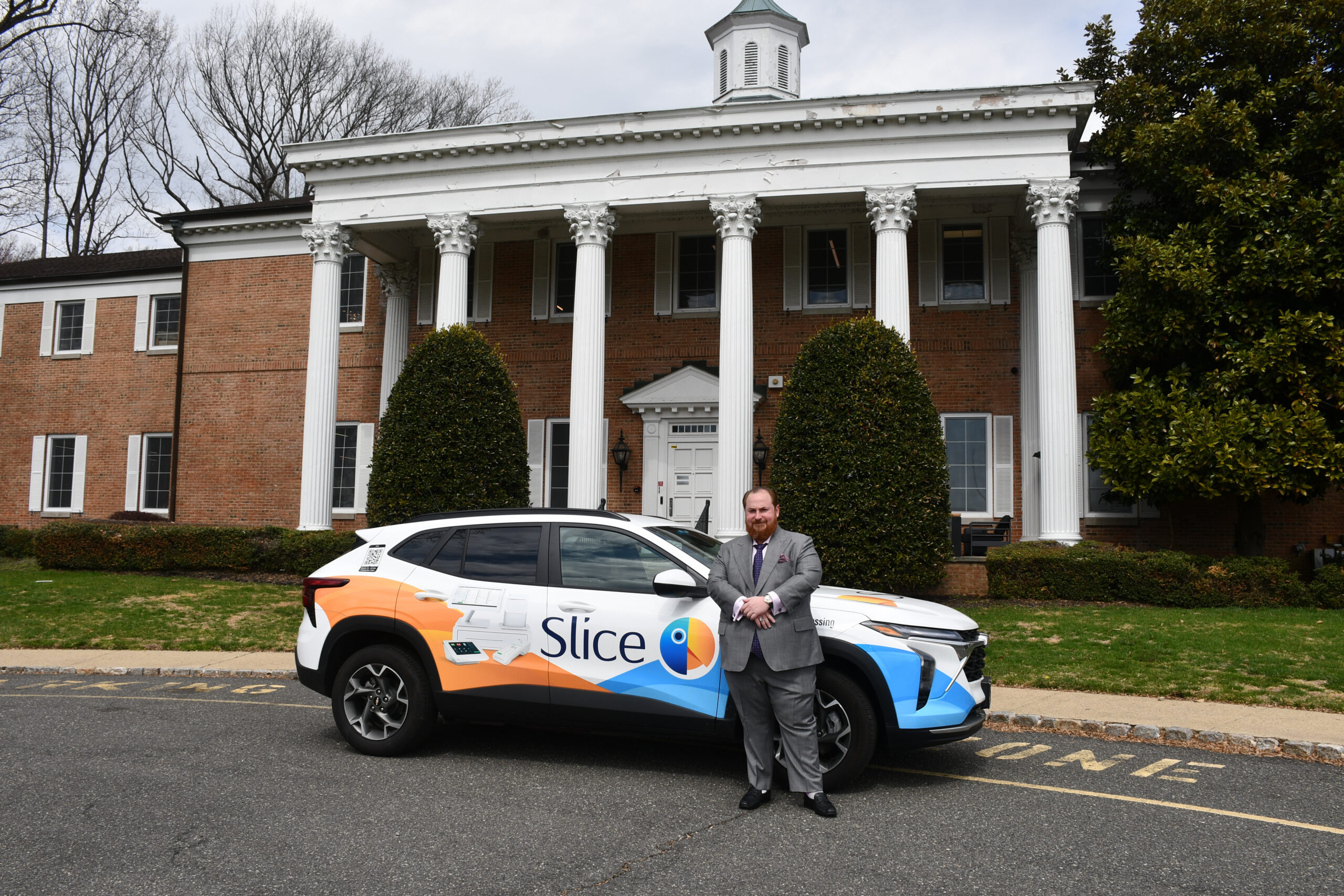
But Groyzburg’s vision reaches beyond transactions. At its core is a simple idea: technology should give entrepreneurs more freedom to build.
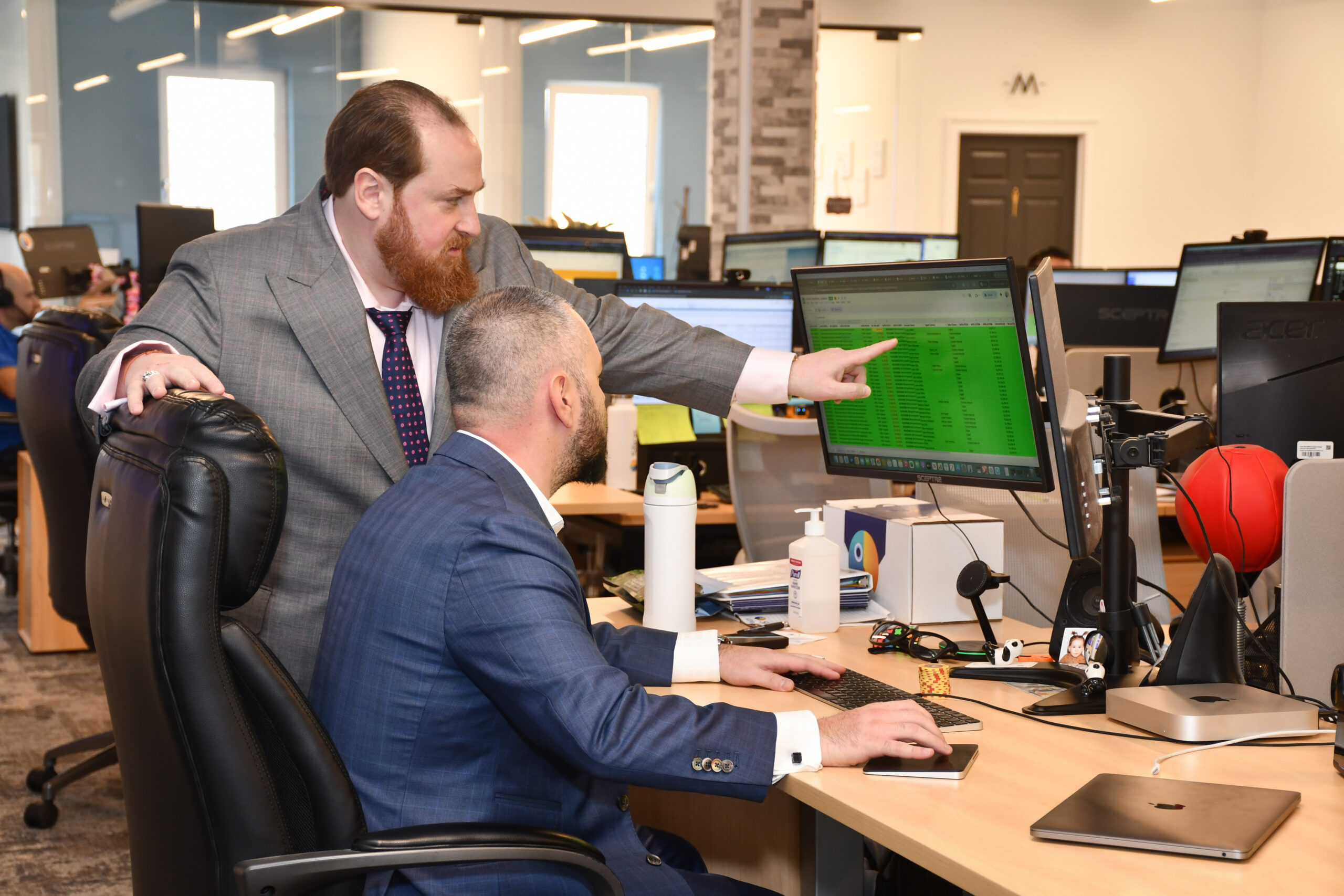
INLOVE sat down with Groyzburg to talk about entrepreneurship, artificial intelligence, trust, leadership—and why the future of financial technology may ultimately be measured not simply by the payments it processes, but by the possibilities it creates.
INLOVE: Every successful company begins with a problem. What inspired you to create Slice, and what gap in the payment industry were you determined to solve?
Alex Groyzburg: My interest in entrepreneurship started long before Slice. I came to the U.S. from Russia when I was young, and at one point, seven members of my family were living in a one-bedroom apartment. Growing up that way gave me an early understanding of how important financial independence and opportunity can be.
I’ve always liked numbers and business, so when I entered financial services and eventually payments, I noticed something that didn’t sit right with me. Small business owners were taking some of the biggest risks, but they often had the least leverage. Payments could be complicated, pricing wasn’t always clear, and useful technology was often too expensive or difficult to access.It felt like there had to be a better approach.
That became the idea behind Slice. We wanted to build the business around the merchant, not just around processing transactions. That meant making payments simpler, being more transparent about pricing, and giving small businesses tools that could help them compete with larger companies.
Behind every business is someone who took a chance. When you look at it that way, you realize you’re not just processing payments.
You’re helping someone build something.
INLOVE: Slice describes itself as more than a payment processor—it’s a growth partner. What does that philosophy mean in practice?
Alex Groyzburg: I think the word “partner” gets used pretty casually in business. To me, being a real partner means caring about what happens after the contract is signed.
A payment might take a few seconds, but our relationship with a merchant can last for years. So we want to understand the business as a whole. Where are they losing time? What costs are too high? How are customers ordering? What information would help the owner make better decisions?
Sometimes the answer is payments. Other times it could be point-of-sale technology, online ordering, loyalty, reporting, inventory, financing or automation.
The technology will keep changing, but the basic philosophy shouldn’t. We want a merchant to be more successful because Slice is part of their business.
If all we do is save someone a little money on a transaction, we’re replaceable. If we understand
their business, solve problems, answer the phone when they need us and help them grow, that’s a much more valuable relationship.
That’s what we’re trying to build.
INLOVE: Small business owners face rising costs every year. How is Slice helping merchants become more profitable while simplifying their day-to- day operations?
Alex Groyzburg: Small business owners are being squeezed from almost every direction.
Labor, food, inventory, insurance and rent are more expensive, while customers continue to expect more convenience and better technology.
At the same time, the owner still has to manage employees, serve customers, make payroll and
hopefully have some time for life outside the business.That’s why I think technology should do more than simply add features. It should give owners back two things: money and time.
We’ve worked on solutions that can reduce unnecessary payment costs, improve point-of-sale systems, simplify operations, automate repetitive tasks and give merchants better information about how their businesses are performing.
The time savings can be especially important. If technology saves an owner even an hour a day, that adds up to more than 350 hours a year. That could be time spent growing the business, opening another location or simply having dinner with their family.
Technology also shouldn’t make running a small business feel like you need an IT department.
The best technology is often the technology you barely notice because it simply makes things easier.
As technology evolves, Slice Payments is looking beyond the transaction toward the larger role data and AI can play in small-business growth.
INLOVE: Technology is evolving at extraordinary speed. What innovations do you believe will have the greatest impact on payments—and on small business—over the next five years?
Alex Groyzburg: Artificial intelligence is going to have a major impact on how businesses operate, although I think we’re still early in the process.
There’s a tendency to talk about AI in extremes—either it will replace everyone or it will solve everything. I don’t think either view is particularly useful. What interests me is practical AI that solves real problems.
Imagine a restaurant owner asking why profits were lower on a particular Tuesday and getting an answer based on sales, labor, inventory and even weather. Or a retailer being told that certain inventory is likely to run out next week before it actually happens.
AI could also help identify unusual transactions, predict staffing needs, create marketing campaigns or identify customers who haven’t returned recently.
Over time, I think small business owners will have access to digital analysts and assistants that would previously have been available only to much larger companies. That could really level the playing field.
At Slice, I encourage experimentation. Some experiments are going to fail, and that’s okay. If everything you try works, you probably aren’t experimenting enough. The companies that succeed with AI won’t necessarily be the ones that predict everything correctly. They’ll be the ones that learn and adapt quickly.
For consumers, payments themselves will probably become less noticeable. They’ll be faster and safer, but the bigger opportunity will be using the data and technology around those transactions to create better experiences.
INLOVE: Financial services ultimately depend on trust—something that cannot be manufactured overnight. What core values have guided Slice’s growth and its relationships with merchants?
Alex Groyzburg: I’ve learned that trust takes much longer to build than revenue.
You can have a great sales month, but you can’t have a great “trust month.” Trust comes from hundreds or thousands of small decisions over time.
Did you answer the phone when there was a problem? Did you tell the truth when it was uncomfortable? Did you take responsibility when something went wrong? Did you actually do what you promised?
Those things eventually become your reputation.
The same philosophy applies inside Slice. I care a lot about creating opportunities for people and promoting from within. Some of our leaders today started at the company and worked their way up.
I want people who join Slice to believe that if they work hard, learn, take responsibility and become good at what they do, there’s room for them to grow.
We’ve made mistakes along the way. That’s part of entrepreneurship. What matters is creating a culture where people aren’t afraid to make a mistake and learn from it. They should be much more concerned about repeating the same mistake without learning anything.
People grow when they’re trusted with responsibility, and companies do too.
INLOVE: Of the businesses that have partnered with Slice, which transformations have reminded you most powerfully of why you started the company?
Alex Groyzburg: There have been thousands of stories over the years, so it’s hard to pick just one. But the ones I find most rewarding are businesses where you can see a real transformation over time.
We’ve worked with merchants who started with a single location and were doing almost everything themselves. As the business grew, we helped them implement the right technology—not just for payments, but for the business behind the payments.
This can include using AI to reduce back-office work, building a website tailored to customer-service goals, installing POS kiosks to reduce staffing needs, or adding tools that simplify managing employees, customers and operations during scaling.What’s rewarding is seeing those tools actually change how the owner runs the business.
They’re spending less time on repetitive work and more time thinking about growth, opening another location or building their team.
Sometimes the most meaningful wins are the smaller ones. A merchant might initially come to us because they have a problem, but eventually they’re calling us to ask, “How can we do thisbetter?”
That shift—from needing us to solve a problem to trusting us to help them grow—is what I’m most proud of.
INLOVE: When you look far beyond the next quarter or the next milestone, what legacy do you hope Slice will ultimately leave?
Alex Groyzburg: As a company grows, it’s easy to measure success through numbers—revenue, employees, merchants, transactions and growth. I still like numbers, but eventually the impact behind those numbers becomes more important.
I came to this country as an immigrant and watched my family build a life here. America gave me the opportunity to become an entrepreneur, and entrepreneurship completely changed the direction of my life.
So when I think about Slice’s legacy, I think about opportunity.
I want Slice to give small business owners a better chance to compete with larger companies. I want employees to be able to join the company at an entry-level position and eventually become leaders. And I want people with an idea to have the tools they need to build something that can change their family’s future.
Years from now, I don’t want people to say that Slice simply processed a lot of credit cards.
I’d rather they say we helped entrepreneurs succeed.
A successful small business supports a family, creates jobs, strengthens a neighborhood and sometimes inspires the next person to take a chance on an idea.
That’s the kind of legacy I’d be proud to leave.
The philosophy behind Slice Payments ultimately reaches beyond financial technology.
The Bigger Slice
There is an irony at the heart of financial technology: the more sophisticated it becomes, the less we should have to think about it.A payment should happen effortlessly. A system should work quietly. Technology should remove friction rather than create another layer of it.
But behind that invisible machinery, something profoundly visible can happen.
A restaurant survives a difficult year. A retailer finds enough margin to hire another employee.
An entrepreneur gets home in time to have dinner with his children. A single location becomes three. An employee becomes a leader. An immigrant with an idea builds a company.
That may be the more compelling definition of innovation—not technology for technology’s sake, but technology that expands what people are capable of building.
Slice operates in the language of transactions, processing, POS systems, data and financial
technology. Yet Groyzburg keeps returning to a different vocabulary:
Trust. Responsibility. Opportunity. Growth.
Every transaction represents an exchange, but every business represents a belief.
Someone believed enough in an idea to begin. Someone stayed when it became difficult.
Someone opened the doors the next morning.
And somewhere, another entrepreneur is preparing to do the same.
The future of payments may be faster, smarter and increasingly invisible. But if Alex Groyzburg
has his way, the purpose behind it will remain unmistakably human.
Because the most important thing Slice may ever process isn’t a payment.
It’s a possibility.

“The future of business isn’t just getting paid—it’s having
the freedom to grow.”
— Alex Groyzburg, Founder & CEO, Slice
Ready To Tap Into What’s Next?

For entrepreneurs ready to simplify operations and explore smarter financial technology, Slice Payments offers solutions designed around the realities of running and growing a business.
Contact: Alex Shukhmakher
Senior Business Solutions Advisor | Slice
1 (917) 335-2134
alex.s@startslice.com
Words by Elle Taylor