
There are places you visit.
And then there are places that recognize you.
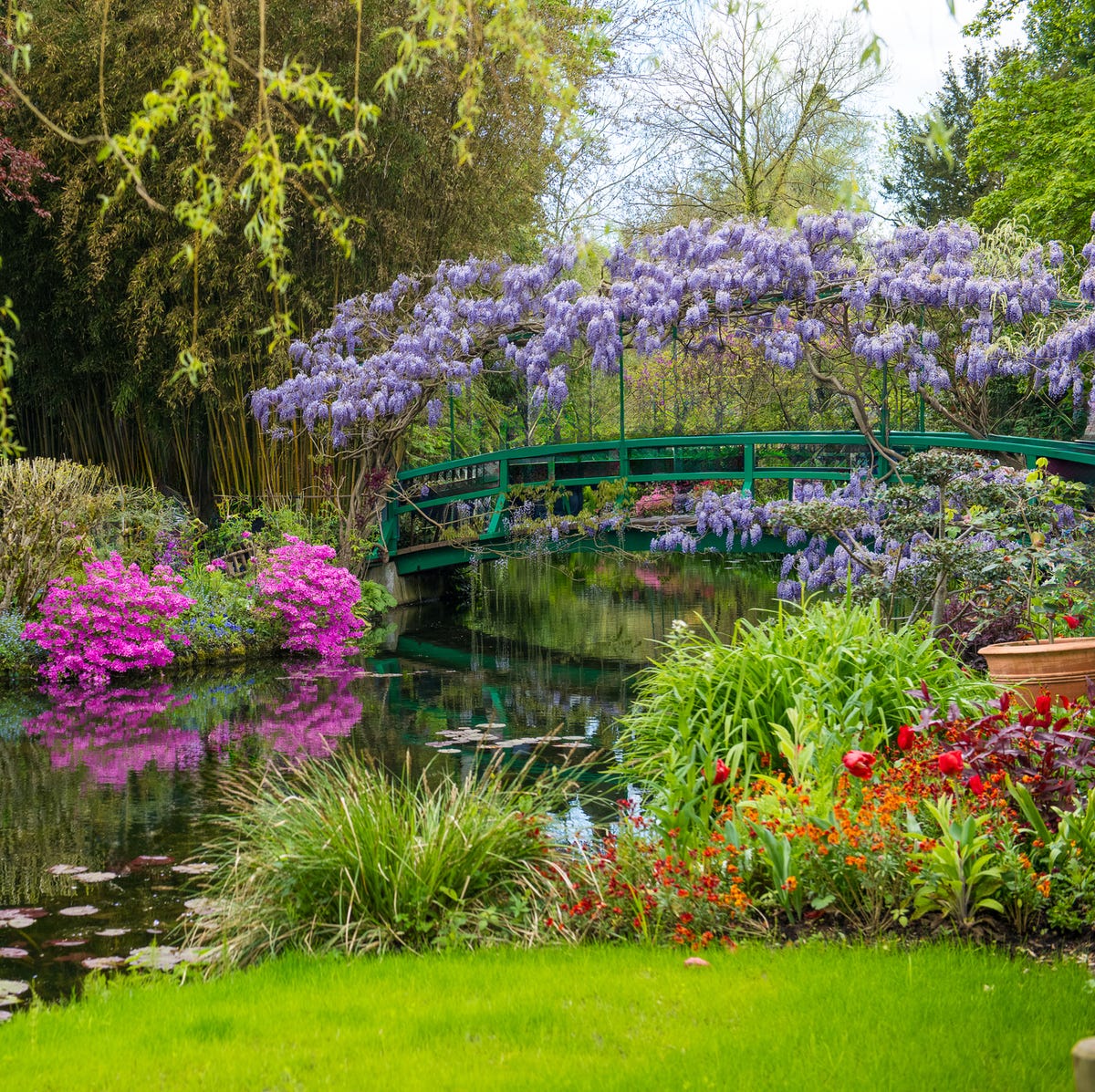
Giverny does not announce itself. It doesn’t rush you. It doesn’t try to be impressive. It waits—quietly, confidently—until your breathing slows enough to hear it. Only then does it open.
The train ride from Paris is ordinary in the way miracles often are before they happen. Fields soften. Time loosens. The world exhales. And then suddenly you are there—at the edge of a village that feels less like a destination and more like a memory you didn’t know you were carrying.
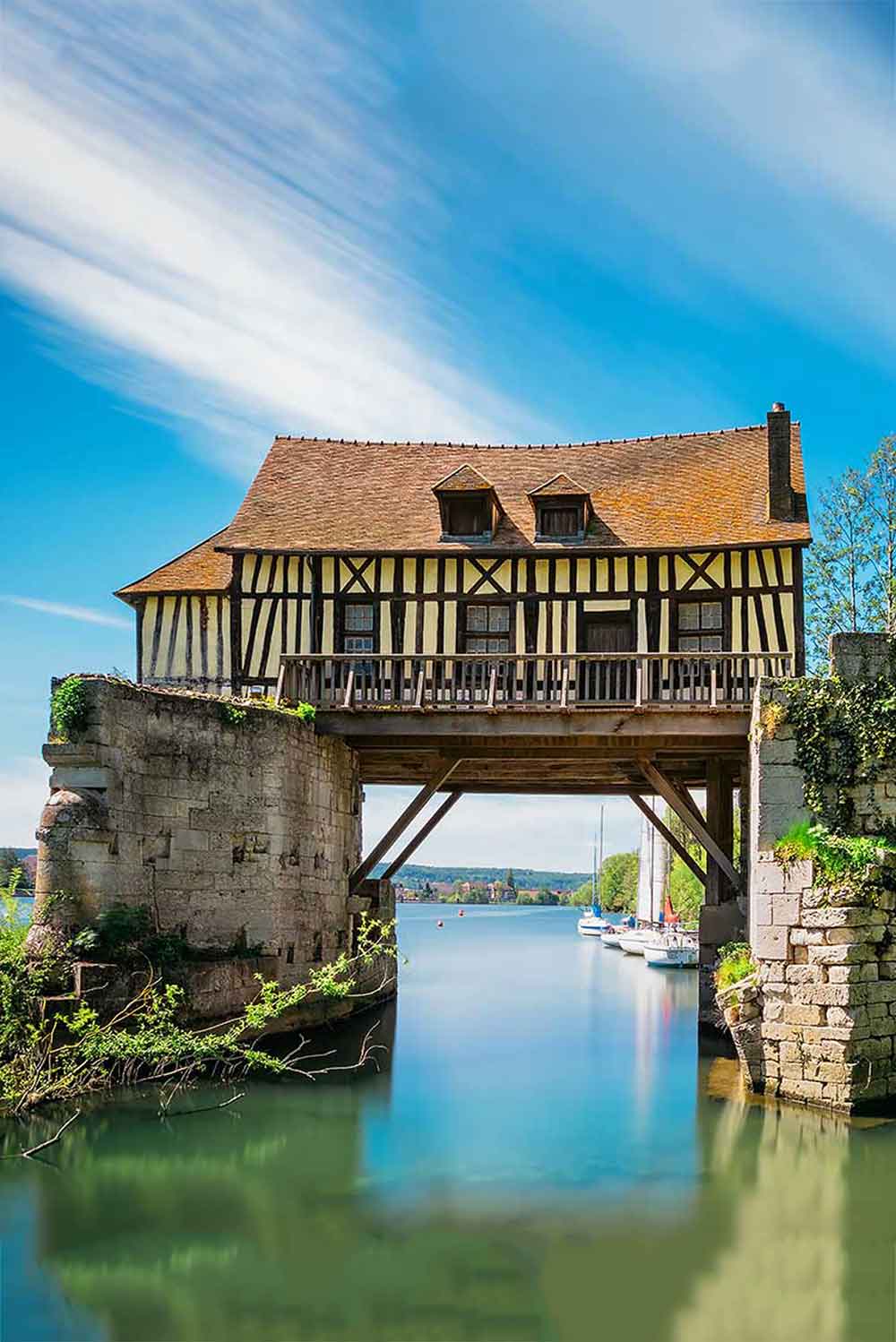
This is where Claude Monet chose to stay.
Not to pass through.
To stay.
That distinction matters.
Monet did not come to Giverny to escape the world. He came to listen to it more closely.
And somehow, more than a century later, the garden still listens back.
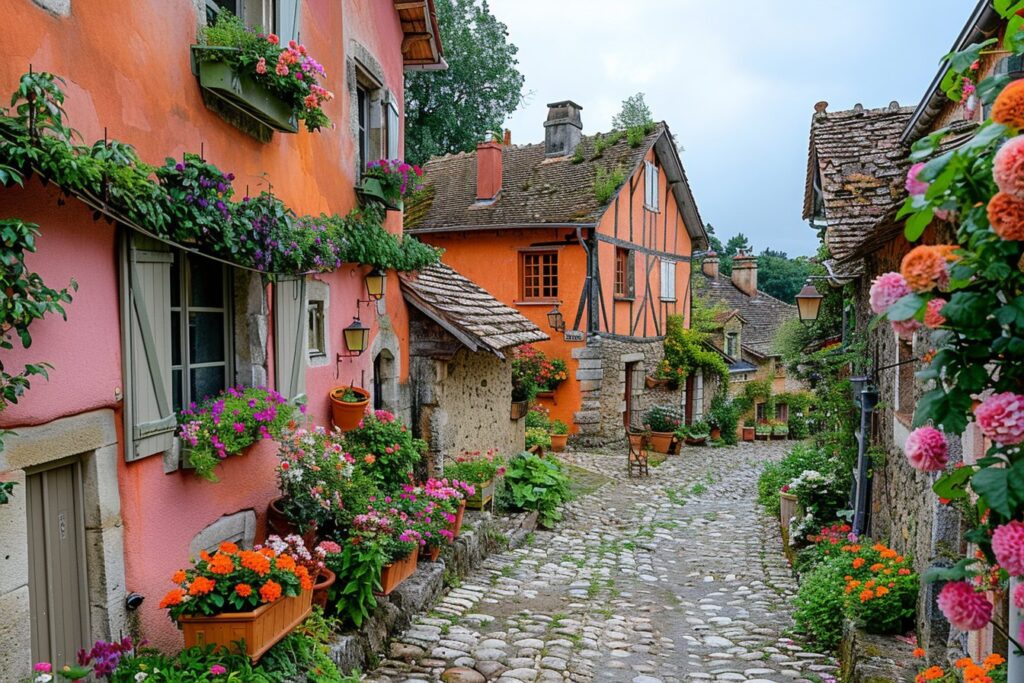
The house is modest. Green shutters. Pink walls softened by years of sun and weather and intention. It does not posture as the home of a genius. It behaves like a place where mornings mattered. Where tea cooled. Where footsteps were familiar. Where life—ordinary, repetitive, sacred—was allowed to happen.
But it is the garden that takes your hand.
Not abruptly. Not dramatically. Gently.
The path curves instead of leading. Flowers spill rather than stand at attention. Colors do not coordinate; they converse. Irises lean into poppies. Roses interrupt daisies. Lavender drifts wherever it pleases. Nothing is symmetrical, yet nothing is chaotic. It is freedom held by devotion.
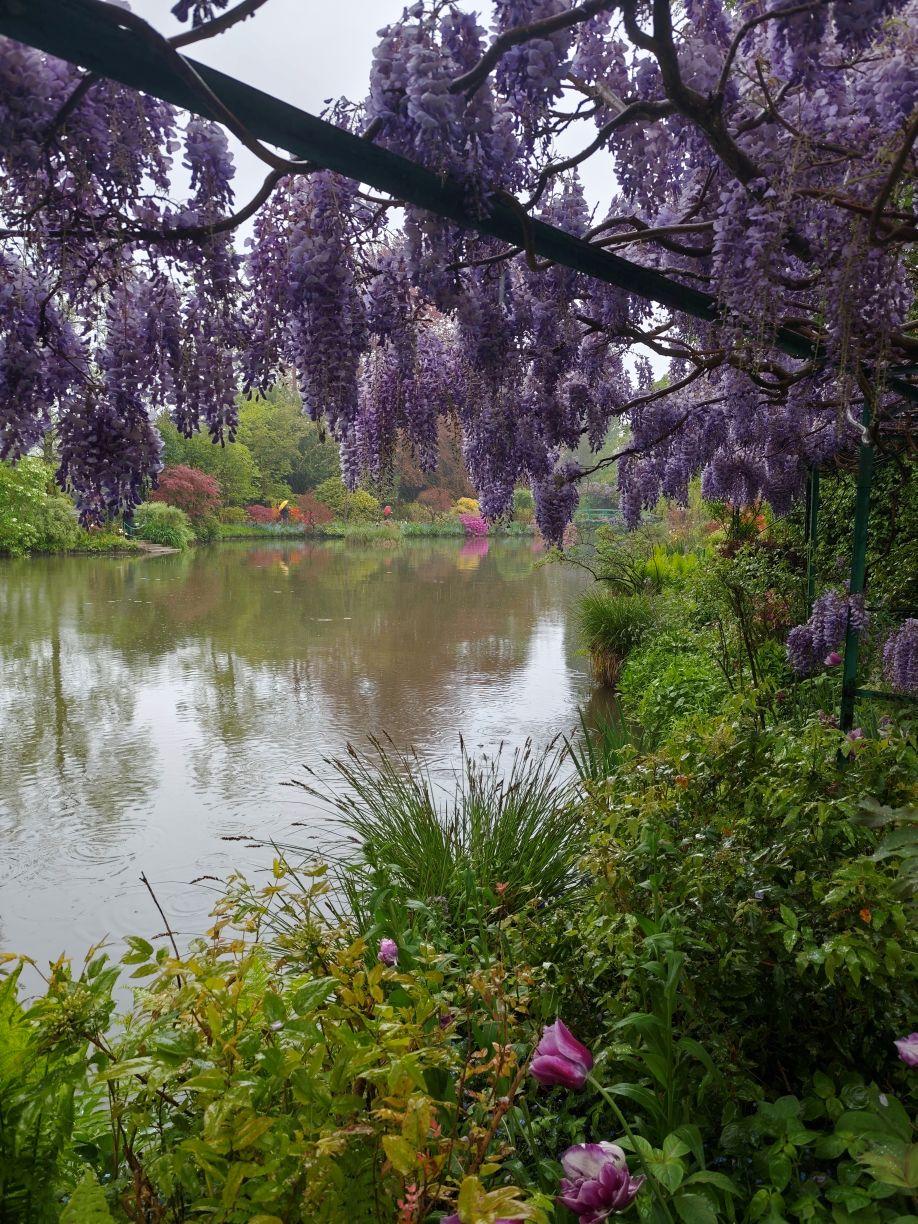
Monet designed this garden the way one writes a life—not to control it, but to pay attention to it.
He planted for movement. For seasons. For mood. For the way light changes its mind every hour.
And walking there, you realize something unsettling and exquisite:
This garden was never meant to be finished.
It was meant to be lived with.
The Japanese bridge appears almost shyly, as if embarrassed by its own fame. Smaller than you expect. Softer. Its green arch bends over the water not as a monument, but as a gesture. The pond beneath it does not sparkle. It breathes.
Water lilies float without urgency. They do not bloom for you. They bloom because this is what they do.
And in that quiet insistence, they teach you something radical.
Beauty does not perform.
Monet painted the same pond again and again not because it changed, but because he did. Morning light asked different questions than evening light. Summer answered differently than autumn. Grief saw what joy could not. Age softened edges youth sharpened.
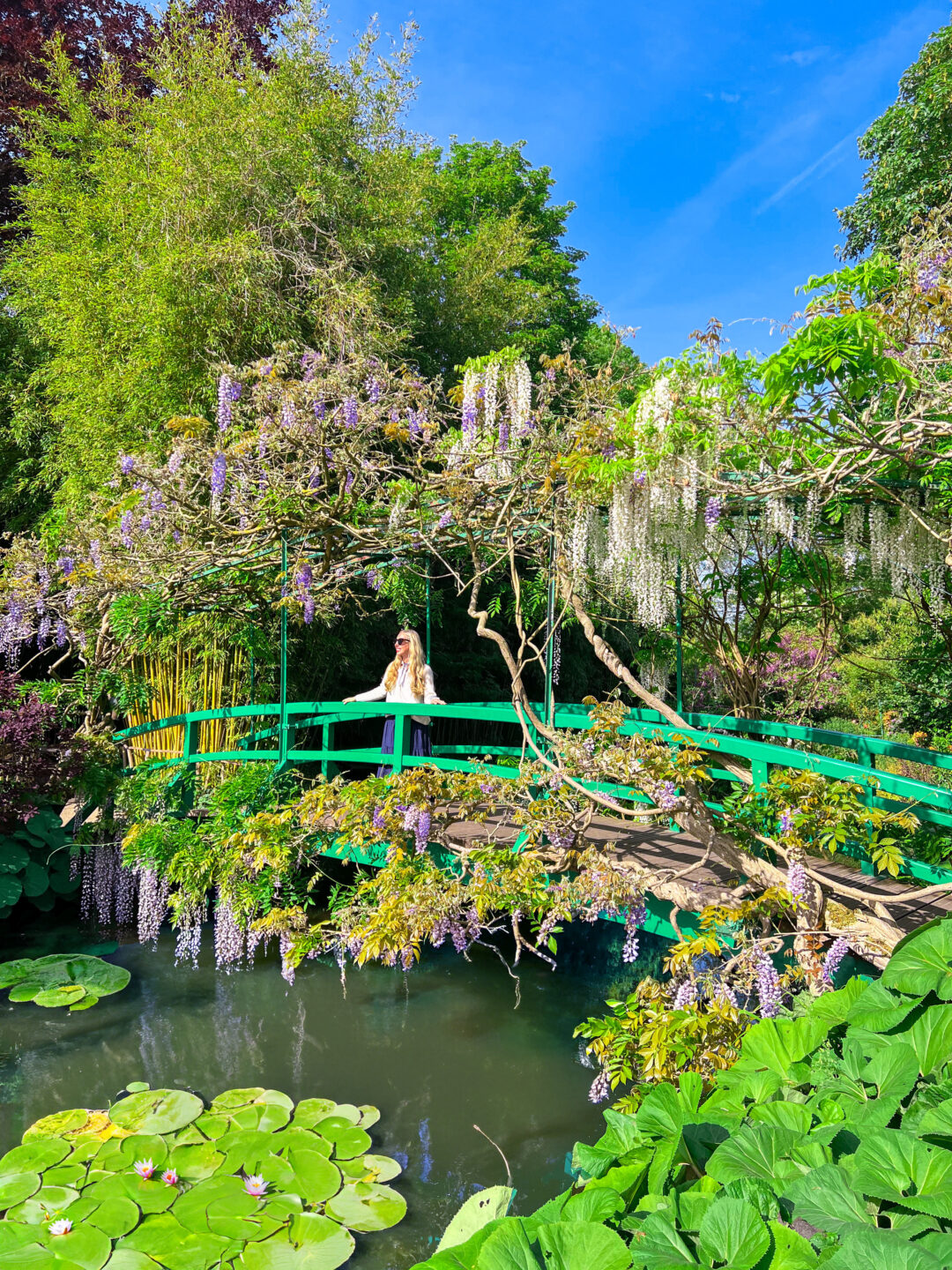
Standing there, it becomes clear: the paintings were never about the lilies.
They were about attention.
About returning to the same place until you see it honestly.
About staying long enough for the ordinary to reveal its divinity.
There is a particular silence in Giverny that feels earned. Not empty, not reverent in a religious sense—but inhabited. The kind of silence that follows a long life fully observed. You feel it between footsteps. Between thoughts. It makes room.
And in that room, memory arrives uninvited.
Not Monet’s memory—your own.
The afternoons you rushed through. The moments you did not notice because you were becoming someone else. The times you believed life would begin later, somewhere brighter, somewhere more complete.
Giverny does not judge this. It simply shows you another way.
Monet did not chase perfection. He chased light—and allowed imperfection to remain.
His garden is proof
Nothing here is pristine. Leaves brown. Petals fall. Water clouds. Time is visible. And yet—because of that—it feels alive in a way manicured beauty never does.
There is intimacy in the scale of it. You are not overwhelmed. You are invited.
Invited to slow your body.
Invited to stop narrating your life and simply stand inside it.
At the edge of the pond, you realize how rarely you let yourself be still without trying to become something else. How often beauty feels like a performance you are meant to rise to, rather than a presence you are allowed to meet.
Monet understood this.
He lost his wife. He buried children. He painted through failing eyesight. Through loneliness. Through the quiet terror of continuing.
And still, every morning, he walked into the garden.
Not because it made him happy.
Because it made him honest.
This is the secret Giverny keeps.
That beauty is not the opposite of suffering.
It is what allows suffering to be witnessed without being destroyed by it.
When Monet painted water lilies near the end of his life, his vision blurred. Colors bled. Edges dissolved. Critics questioned the work. He kept painting anyway.
Standing here, you understand why.
The garden had taught him that clarity is not always sharp. Sometimes it is wide. Sometimes it is forgiving. Sometimes it is found in letting go of detail and trusting feeling instead.
This is not a place for selfies, though people take them. It is not a place for checklists, though guidebooks try. It is a place that quietly resists consumption.
You cannot rush it without losing it.
The benches are placed for lingering. The paths encourage wandering. The light shifts so subtly you only notice it once it has already changed you.
And then, without ceremony, you realize something else.
You are not here to admire Monet.
You are here to practice seeing.
To practice staying.
To practice letting one place, one moment, one breath be enough.
Leaving Giverny feels less like departure and more like promise. A promise you are not sure you will keep, but one you carry anyway. To look longer. To hurry less. To return—to people, to places, to yourself—with deeper attention.
The garden does not follow you.
But it does something better.
It recalibrates you.
So that when you return to your own life—the noise, the ambition, the ache—you remember what it felt like to stand beside water that asked nothing of you.
And in remembering, you change.
This is the gift Monet left behind.
Not paintings alone.
But a way of being with the world that still feels possible—if you are willing to stay.
Words by Elena Vasilevsky